

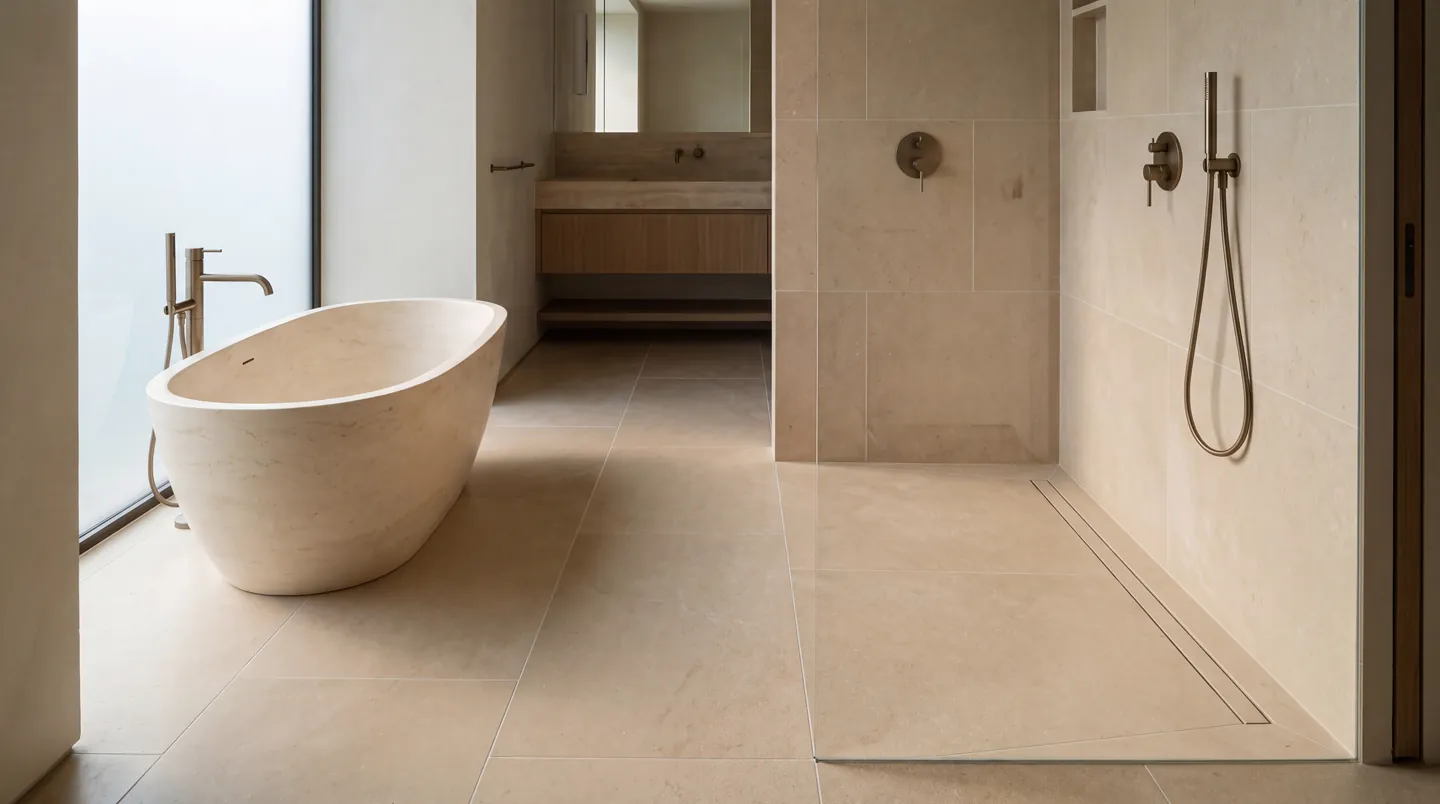
Lower-Level Floors in Longmont Start With a Moisture Test
Areas near St. Vrain Creek were affected by the September 2013 floods. Whether or not your street was one of them, the everyday moisture risk in a basement is quieter than that: vapor moving up through the slab, all year long.
Two tests tell you what you're dealing with. A calcium chloride test measures the moisture vapor emission rate (MVER) at the surface, in pounds per 1,000 square feet over 24 hours. An in-situ relative humidity test under ASTM F2170 sets probes into drilled holes and reads conditions inside the slab. Many manufacturers now specify the RH method, and each installation guide sets its own limit.
Pass, and most below-grade products are on the table, including waterproof rigid-core vinyl plank and porcelain tile over a suitable membrane. Fail, and the conversation changes.
Water-Resistant and Waterproof Are Different Promises
| Product | Typical label claim | What it doesn't cover |
|---|---|---|
| Laminate | Water-resistant: surface spills for a rated number of hours | Standing water or a wet slab |
| Rigid-core vinyl | Waterproof core that won't swell | Water trapped underneath, which can feed mold |
| Porcelain tile | Tile body absorbs almost no water | Cement grout, which stays porous unless sealed |
| Engineered hardwood | Some lines add water-resistant coatings | Prolonged moisture; the core still swells |
| Carpet | Stain-resistant fiber | Pad and backing that hold water against the slab |
Read the warranty exclusions, not the box. Many waterproof warranties exclude flooding and moisture rising from below, which is why water-resistant laminate belongs upstairs.
Choose by What the Basement Tells You
Older Homes Near Downtown Main Street Need Flat, Stiff Floors First
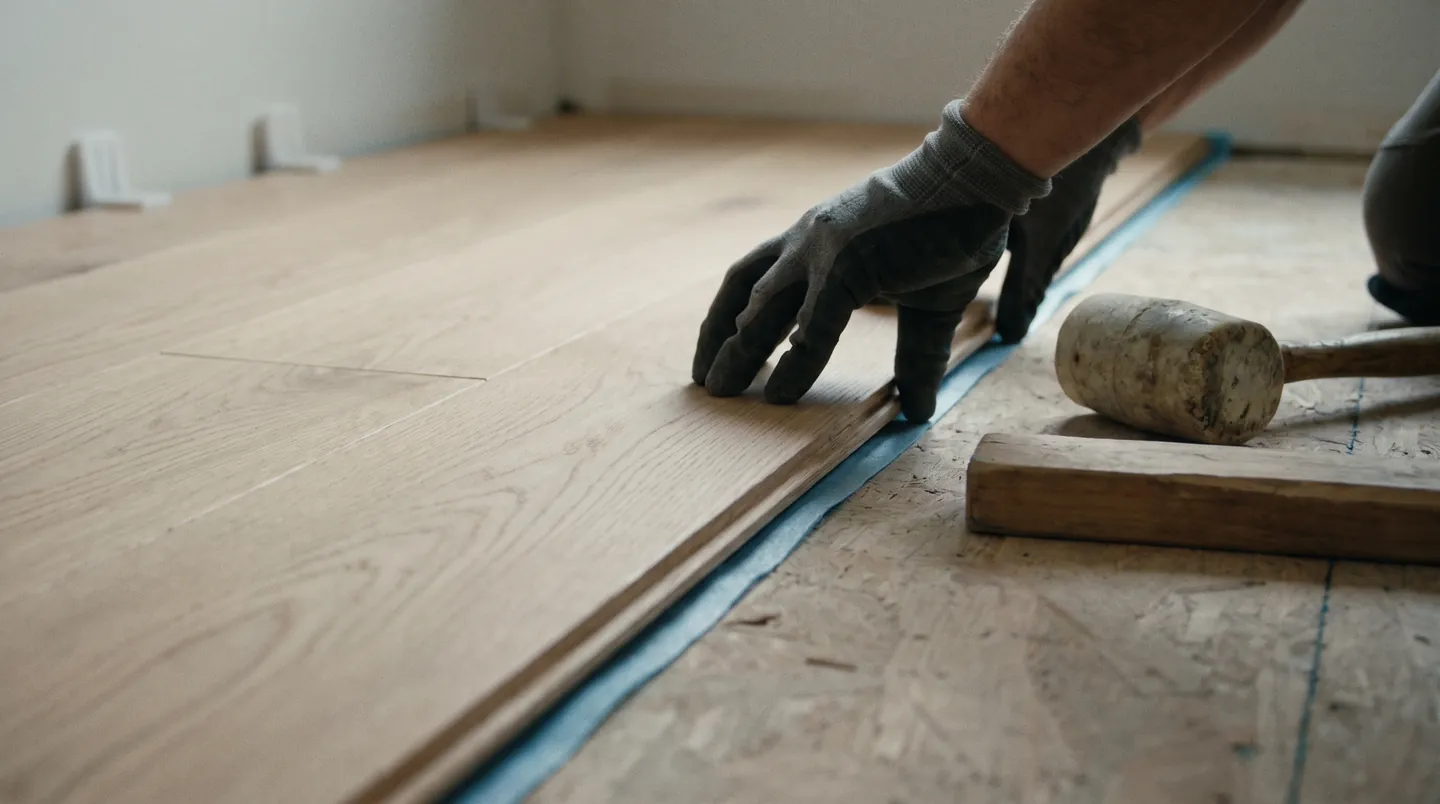
Houses around Longmont's historic downtown can have plank subfloors, decades of settling and floors that dip toward a center bearing wall. None of that is unusual. It just has to be dealt with before a finish floor goes down, or the new floor telegraphs every hump.
Tile and Stone Demand More From Old Joists Than Wood Does
Ceramic and porcelain tile generally call for a floor stiff enough to meet L/360 deflection. Natural stone wants L/720, twice as stiff. Older joists often clear the first number and miss the second. Sister the joists or add plywood underlayment before setting marble in a bathroom, or pick a porcelain that looks like stone. Read how subfloor prep fits into a flooring installation before anyone orders tile.
Down the road, lake-area and walkout floors in Loveland raise their own water questions, and Boulder's older homes share the refinishing ones. The full list of Front Range communities is one click away, and once the slab numbers are in, ask for a lower-level flooring estimate.
Longmont flooring questions
Is carpet a bad idea in a Longmont basement near the creek?
Not automatically, but it's the least forgiving choice if water ever arrives. Wall-to-wall carpet and pad hold moisture against the slab and usually have to be pulled and thrown out after a leak. If you want softness, carpet tile on a slab that tests dry, or porcelain tile with area rugs, gives you a recovery plan that a padded broadloom floor doesn't.
How long should a new basement slab cure before flooring goes down?
The old rule of thumb is about 30 days per inch of thickness in good drying conditions, so roughly four months for a typical 4-inch basement slab. Treat that as a minimum, not a green light. Cold, closed-up basements dry slowly. A calcium chloride or in-situ RH test is the only reliable answer, and the flooring warranty will usually require one.
Can dipping, squeaky wood floors in an older home be saved?
Often. Squeaks usually come from loose subfloor boards rubbing on nails, which can be screwed down from below or through the face and plugged. Dips need a look at the framing first. If a beam or joist has sagged, correct that before refinishing. If the dip is minor and stable, sanding will follow it, and most people stop noticing once the finish is fresh.