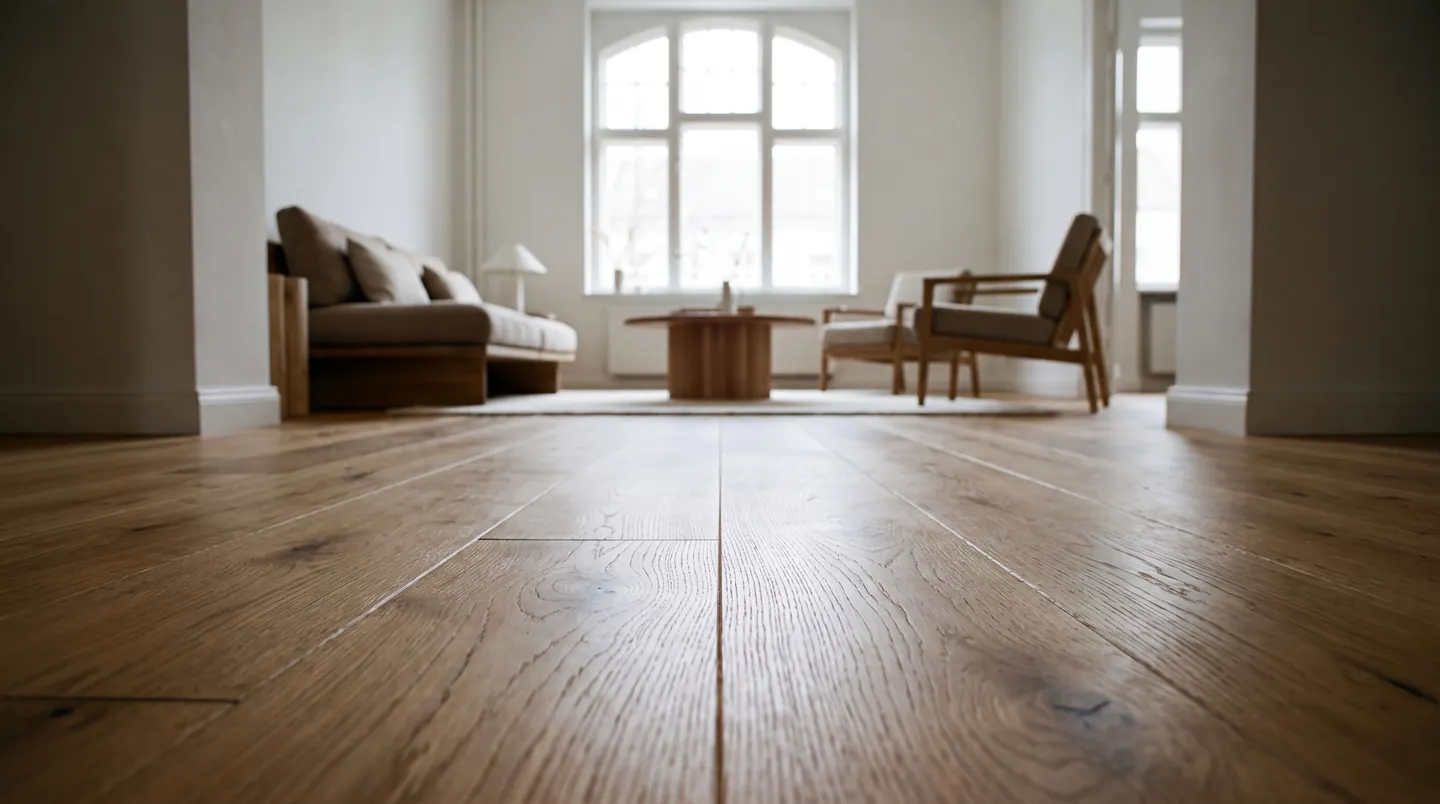
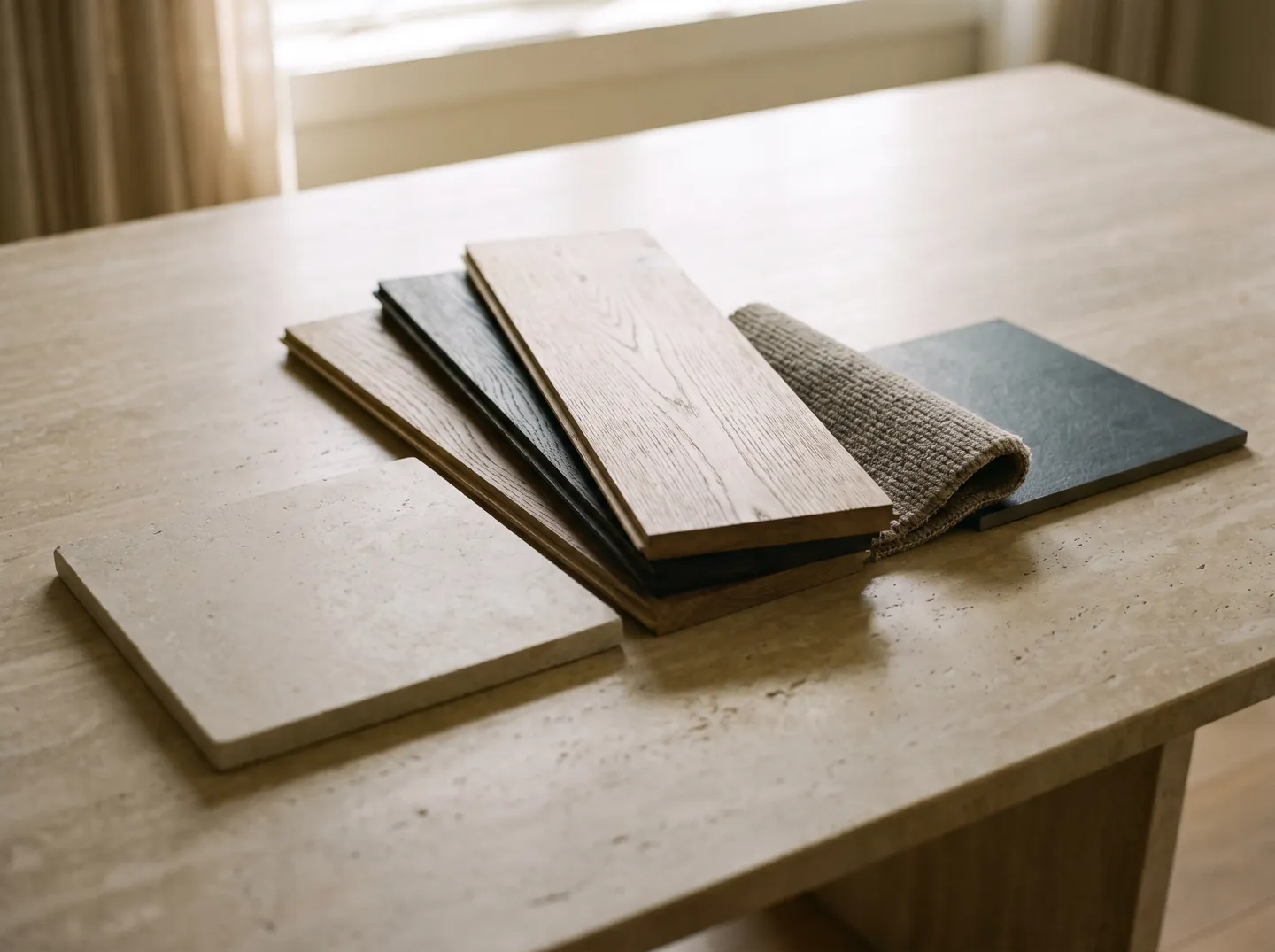
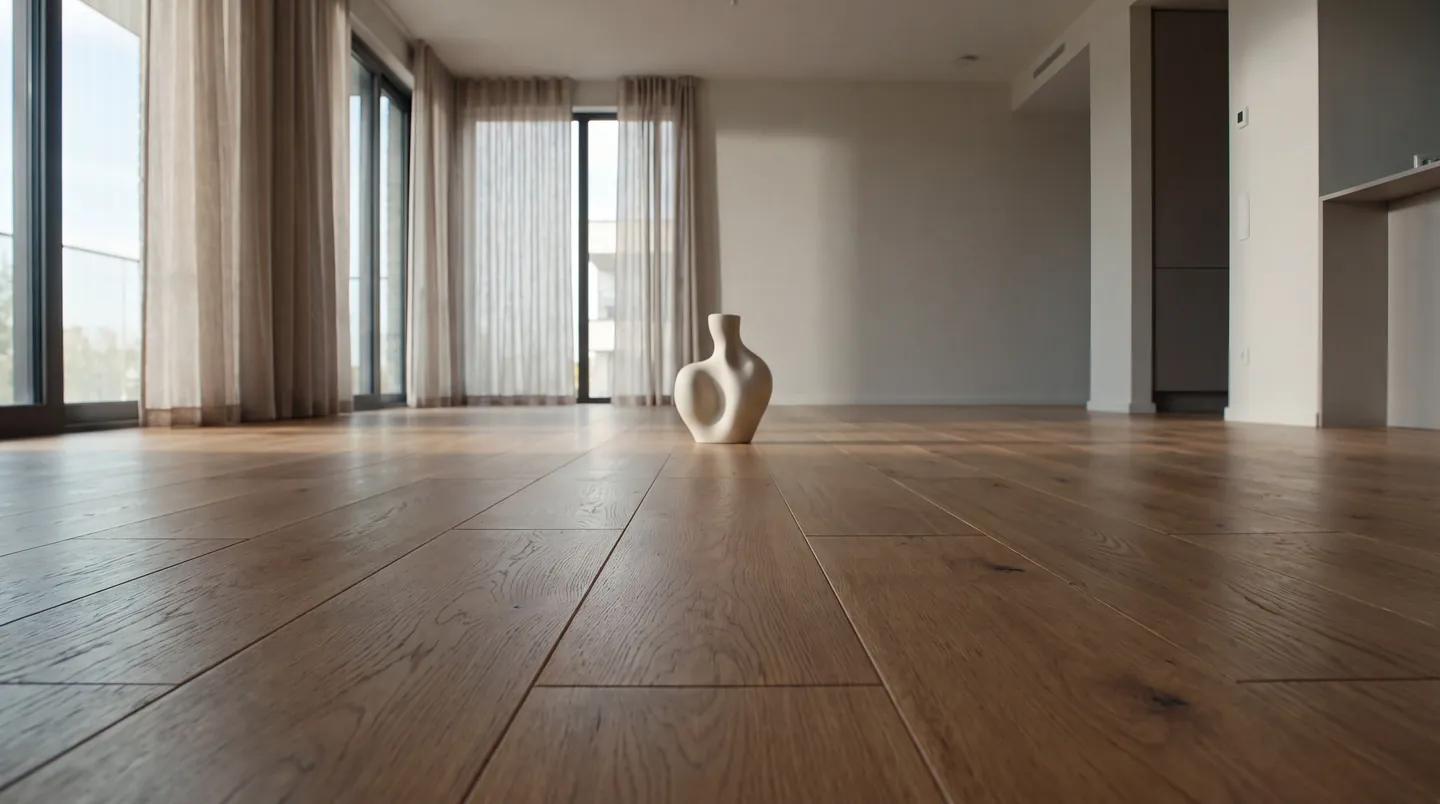


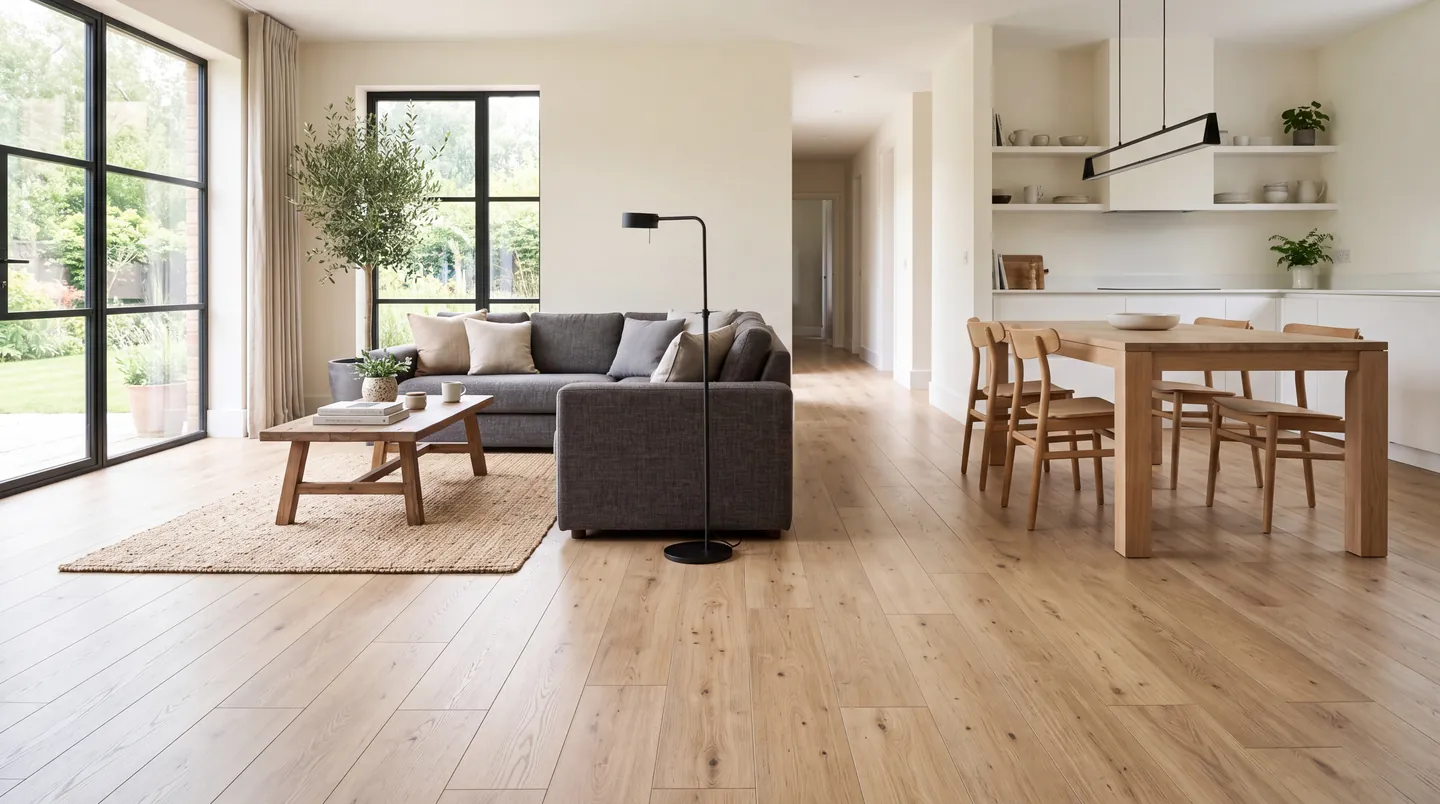
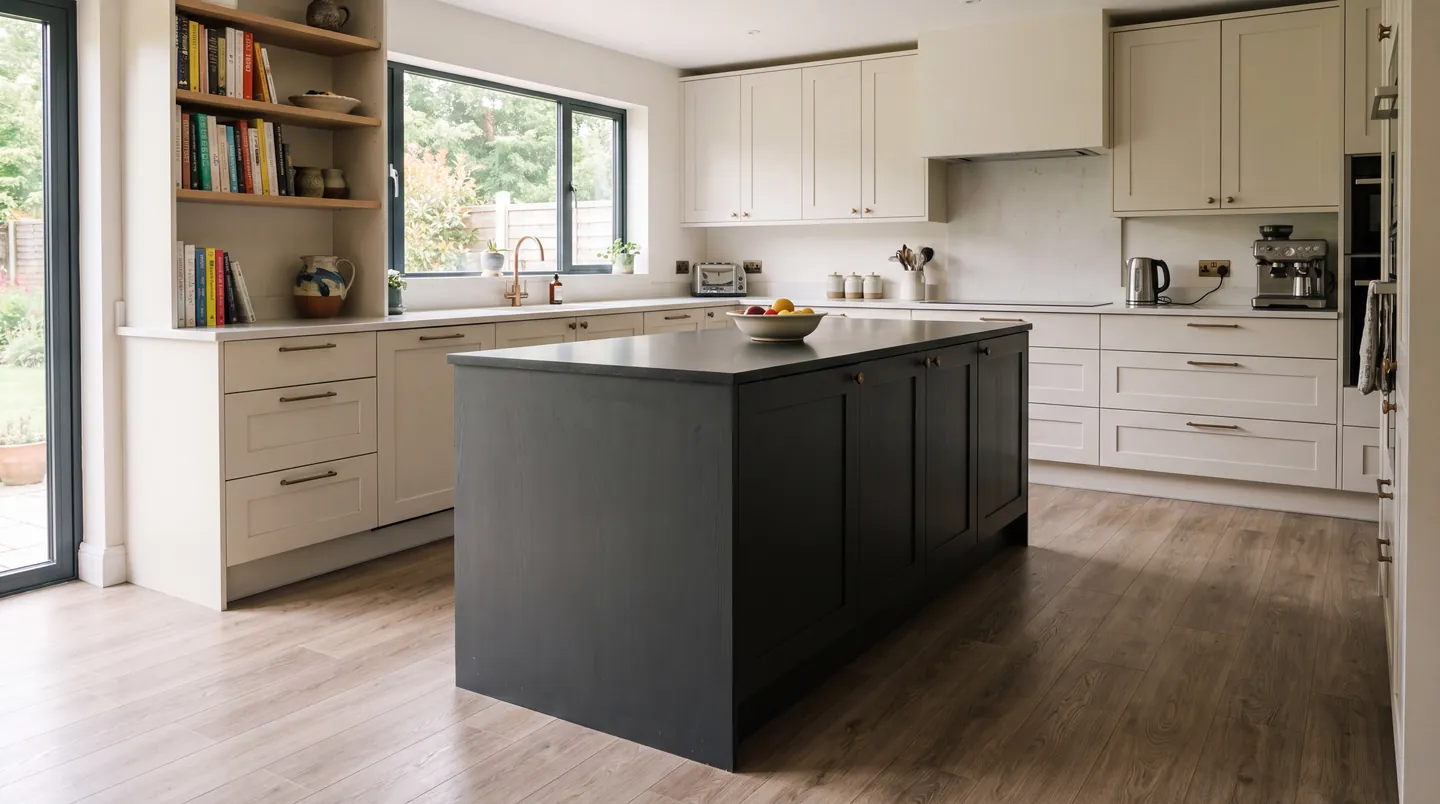
Open living space with light oak-look laminate plank flooring

HDF core laminate

Laminate Flooring for Homes That Need a Harder Surface

Laminate flooring handles claws, chair legs and afternoon sun better than most vinyl, but its fiberboard core still hates standing water, so where you install it matters more than the pattern you pick.

Laminate Flooring Is a Photograph Under a Very Hard Shell

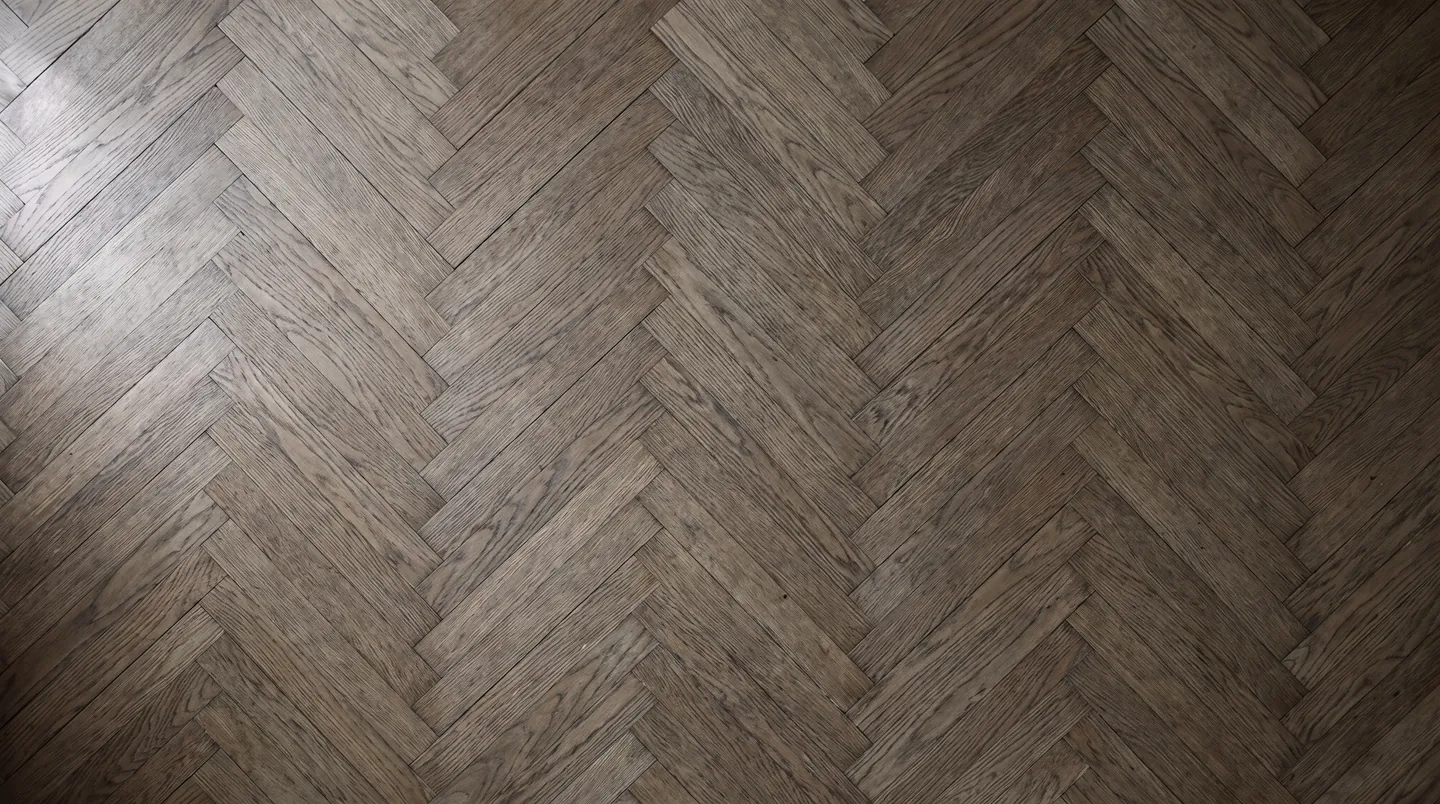
Laminate flooring is four layers fused under heat and pressure. On top sits a clear melamine overlay loaded with aluminum oxide. Below that comes a printed decor paper, then a high-density fiberboard (HDF) core, then a backing layer that keeps the plank from bowing. Better products emboss the surface in register, so the texture you feel lines up with the grain you see.

Two things follow. That melamine top is harder than the wear layer on most rigid core luxury vinyl plank, which is why laminate holds up so well to pets and grit. And there's no wood to sand. Unlike solid or engineered hardwood, a worn laminate plank gets replaced, never refinished.

What the AC Rating Tells You, and What It Doesn't

Laminate AC ratings and typical uses
RatingIntended trafficWhere it fits at home
AC1Moderate residentialBedrooms and closets
AC2General residentialLiving and dining rooms
AC3Heavy residential, moderate commercialAny room in most homes, kitchens and halls included
AC4General commercialBusy households with large dogs
AC5Heavy commercialRarely needed in a house

The AC classification is built mainly on surface performance: abrasion, impact and staining. It says little about how the joints survive a spill, so look for a separate standing-water rating.
Abrasion class

Match the AC rating to the traffic, not the price.

AC3: The whole house, most families

The sensible floor for living areas, hallways and homes with kids. Also rated for light commercial spaces.

Typical rooms

  • Living rooms
  • Hallways
  • Home offices

AC classes measure surface abrasion and impact. They say very little about water. Check the product's own moisture rating separately.

Edge Swelling Is the Failure That Ends Laminate Floors

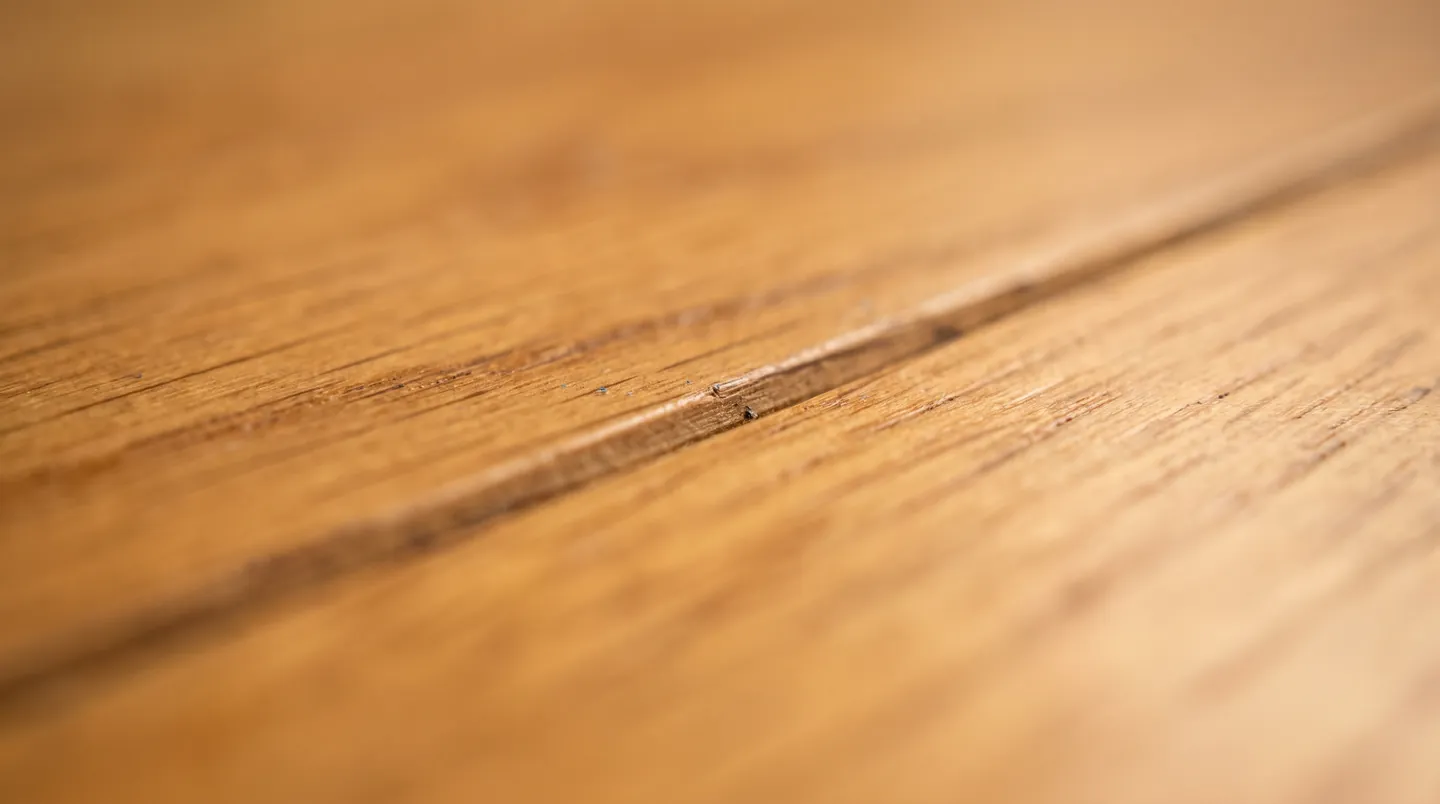
HDF is compressed wood fiber. Let water sit on a seam and the fibers at the joint wick it up, swell, and lift the plank edges into a small ridge. Installers call it peaking. It doesn't settle back down when the floor dries, and sanding can't touch it.

Water-resistant laminate attacks the problem at the joint with coated or wax-treated edges, denser cores and tighter locking profiles. Some manufacturers publish a standing-water rating in hours. Read the conditions behind that number: it assumes a spill on an intact, correctly installed floor, not a supply line leaking under the planks overnight.

Cleaning swells as many seams as spills do. Skip steam mops entirely; most laminate care guides prohibit them outright. A well-wrung microfiber mop or a light spray cleaner works fine, and oil soaps or wax leave a film that dulls the melamine.

Moisture Limits Start Below the Floor

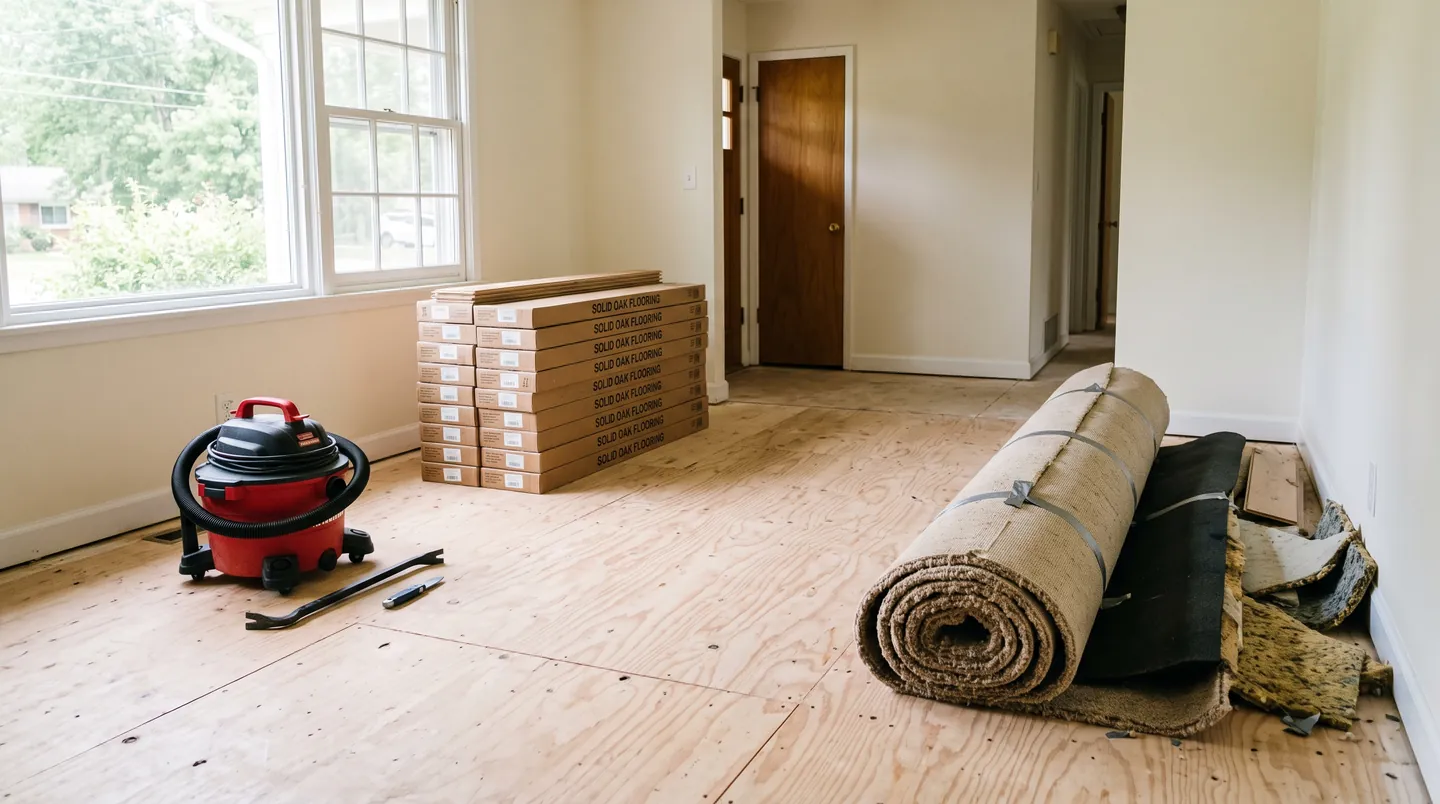
Over concrete, most manufacturers require a 6-mil polyethylene vapor retarder or an underlayment with one built in, plus a slab moisture test against their stated limit. Over wood subfloors, check moisture content and fix any bounce first. Laminate joints don't tolerate deflection.

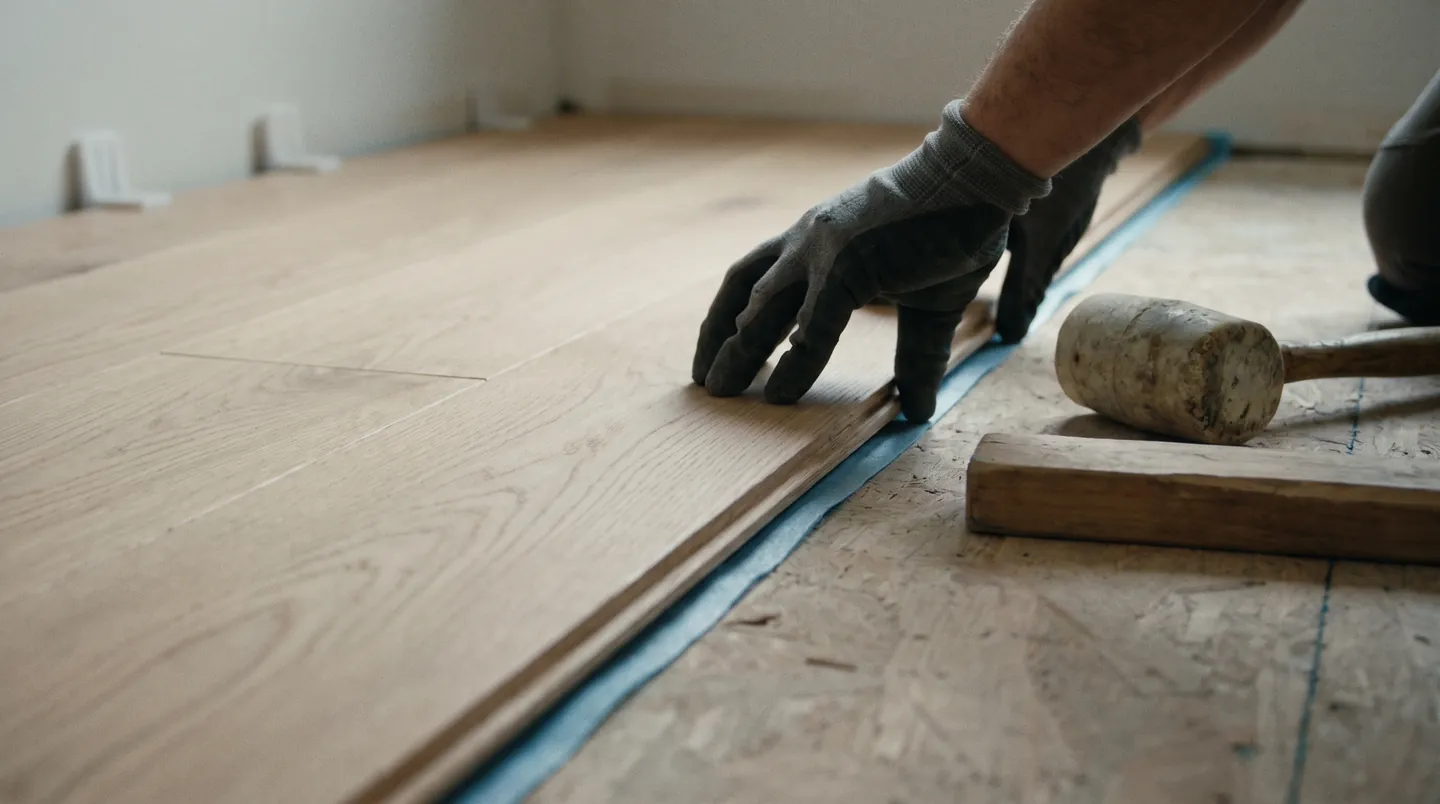
Two more rules get broken constantly. Don't stack a second pad under a plank with attached underlayment unless the guide allows it, because a soft base flexes the joints until they let go. And leave the expansion gap at every wall, cabinet and pipe, typically around 1/4 to 3/8 inch depending on the product. Many manufacturers also want about 48 hours of acclimation in the room. Careful laminate installation and subfloor prep covers all three.

Rooms Where We'd Skip Laminate

These rooms belong to porcelain tile or natural stone, or at minimum to vinyl.

  • Full bathrooms, where water pools at the base of the tub or shower.
  • Laundry rooms, where a failed washer hose can run for hours unnoticed.
  • Mudrooms that collect snowmelt and wet boots.
  • Basements with any history of water entry.
  • Any room with a floor drain.

When Laminate Beats Luxury Vinyl, and When It Doesn't

Make the call room by room, not house by house.

Large dogs and scratched floors are your main worry
Laminate, AC4 if you can get it. The melamine top resists claws better than most vinyl.
The room gets hours of direct sun
Laminate. HDF doesn't expand with heat the way PVC-based vinyl does.
It's a kitchen with kids, a dishwasher and a mop habit
Rigid core vinyl, unless the laminate carries a standing-water rating and spills get wiped fast.
It's a basement, full bath or laundry room
Vinyl or tile. Don't gamble a fiberboard core there.
You want convincing wood texture on a mid-range budget
Laminate with embossed-in-register texture.
Footstep noise matters, like a bedroom over the living room
Either, but laminate needs a dense acoustic underlayment to avoid a hollow click-clack.

The bottom line

The Bottom Line on Laminate

Kitchens and halls
AC3 minimum; AC4 with large dogs.
Wet rooms
Skip it. Use tile or vinyl.
Sunny rooms
Laminate over vinyl.
Spill protection
A published standing-water rating, plus fast cleanup.
Repairs
One spare box from the same production lot.

Know which rooms are getting laminate and which need vinyl or tile? Request a laminate flooring estimate.

Laminate Flooring questions

What AC rating do I need for a house with pets?

AC3 covers most homes, kitchens and hallways included. With large dogs, or if you want maximum scratch resistance, step up to AC4. AC5 is built for heavy commercial traffic and rarely makes sense at home. The rating describes the surface; joint water resistance is a separate spec worth checking.

Can laminate flooring get wet?

Brief spills, yes, if you wipe them up. Standing water, no. Water left on a seam soaks into the fiberboard core and swells the edges permanently. Water-resistant laminate buys more time, and some manufacturers publish how many hours their joints hold out, but no laminate belongs in a room that floods.

Is 12mm laminate better than 8mm?

It feels better. Thicker planks sound more solid and bridge minor subfloor flaws a bit more easily. They aren't more scratch resistant; the AC rating covers that. Check the added height at doorways and appliance openings too, since a 12 mm plank plus underlayment can create awkward transitions.

Do you need underlayment under laminate flooring?

Yes. Laminate floats on some kind of underlayment. Many planks come with a pad attached; others need separate foam, cork or felt. Over concrete you'll also need a vapor retarder unless the pad includes one. Don't add a second pad under attached underlayment unless the manufacturer allows it.

Can you refinish laminate flooring?

No. The surface is a melamine overlay on printed paper, not wood, so sanding destroys the pattern. Light scratches can be hidden with color-matched repair kits or fill. Deep damage or swollen edges mean replacing individual planks, which is why keeping spare boxes from the original lot pays off.

Request an estimate for laminate flooring

Your dream space starts here

Tough floors, chosen with care.

Tell us about the room, the way you live in it and the look you're after. We'll come back with materials that suit it and a clear estimate.