

Tile and stone flooring outlasts almost anything else you can put down, but only when the substrate, setting material and layout are right. Here's how to choose the tile, and what sound installation looks like underneath.
Choose Tile and Stone Flooring by How It's Made
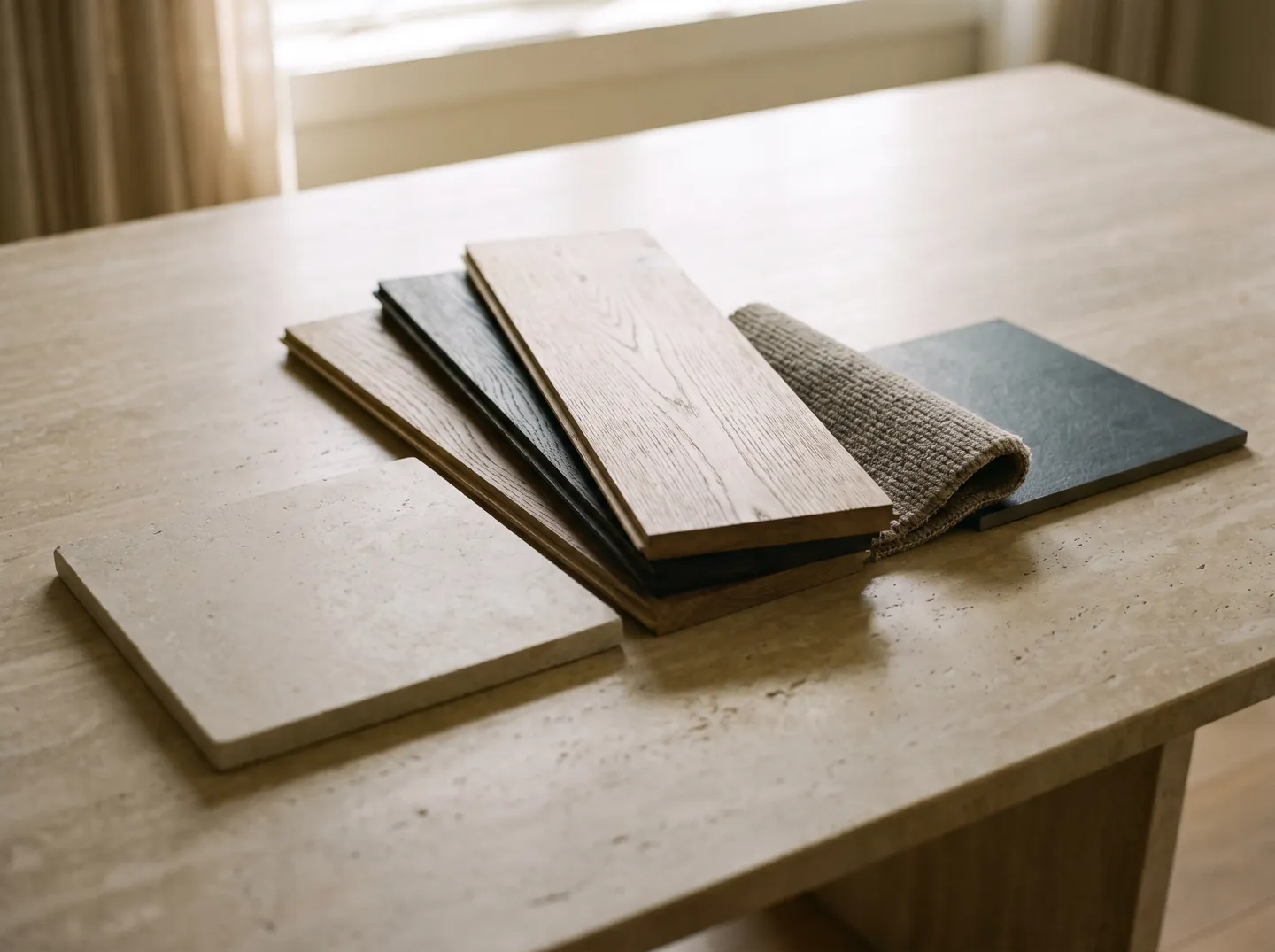
Two tiles can look identical in a showroom and behave nothing alike on your floor. Porcelain is pressed denser and fired hotter than standard ceramic, and the ANSI standard defines it by water absorption of 0.5 percent or less. That density makes it the default for kitchens, mudrooms and entries.
Ceramic is lighter, easier to cut and perfectly fine in a guest bath. Natural stone is a different animal. Marble, travertine, limestone and slate come out of a quarry, so every piece brings its own porosity and quirks. Still weighing tile and stone flooring against waterproof wood looks? Our luxury vinyl plank guide covers that route.
Porcelain, Ceramic and Natural Stone Compared
| Property | Porcelain | Ceramic | Natural stone |
|---|---|---|---|
| Water absorption | 0.5% or less by definition | Higher; varies by clay body | Varies widely by stone |
| Chips | Best hidden by color-body lines | Expose a contrasting clay body | Same material all the way through |
| Sealing | Tile needs none; cement grout may | Glazed tile needs none | Usually required and renewed |
| Acid sensitivity | Very low | Low on glazed faces | High on marble, limestone and travertine |
| Best fit | Kitchens, baths, entries, radiant heat | Light-traffic baths and laundry | Rooms where you'll accept patina |