Client to confirm: phone numberClient to confirm: email address
Hardwood, luxury vinyl, laminate, tile, stone and carpetFlooring Collections
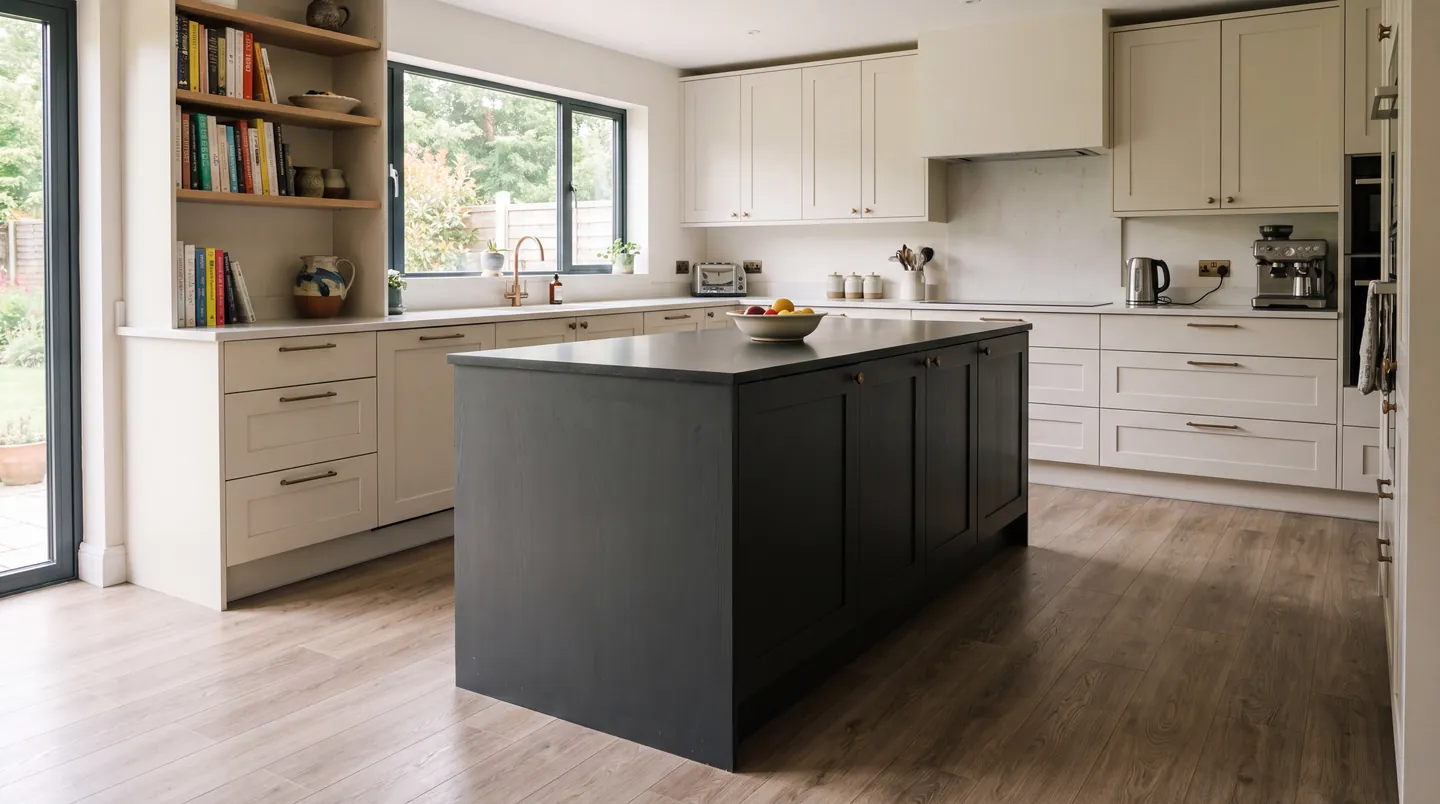
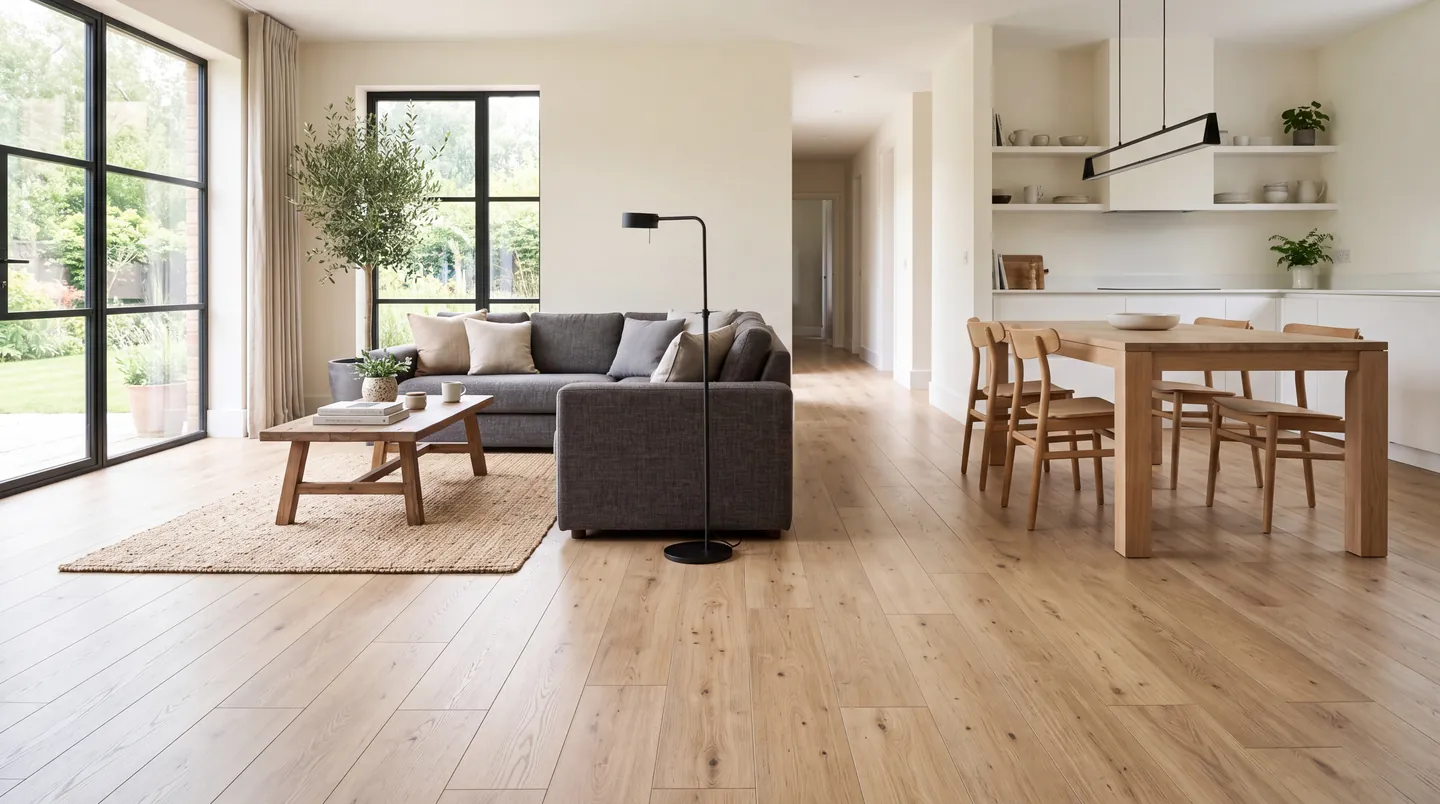
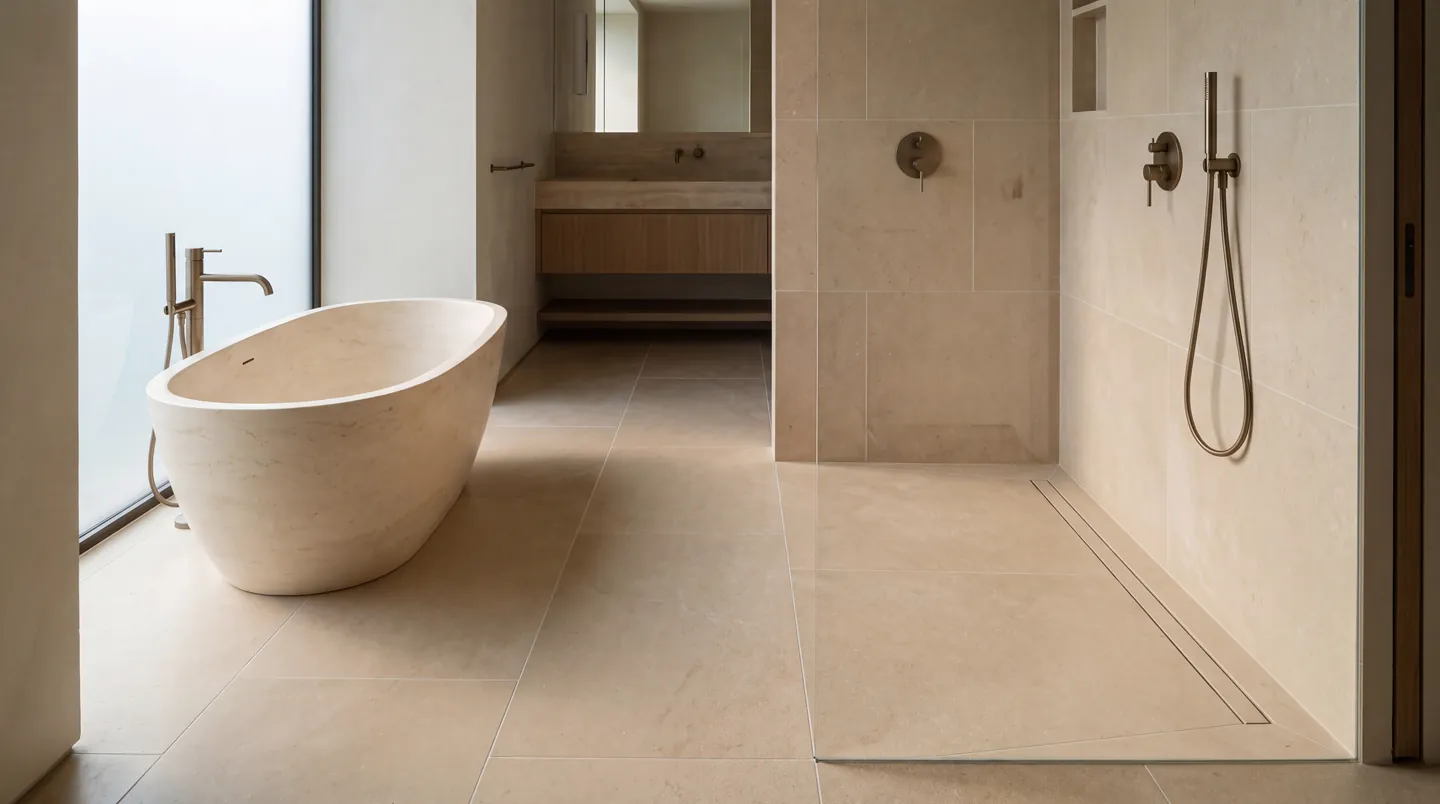
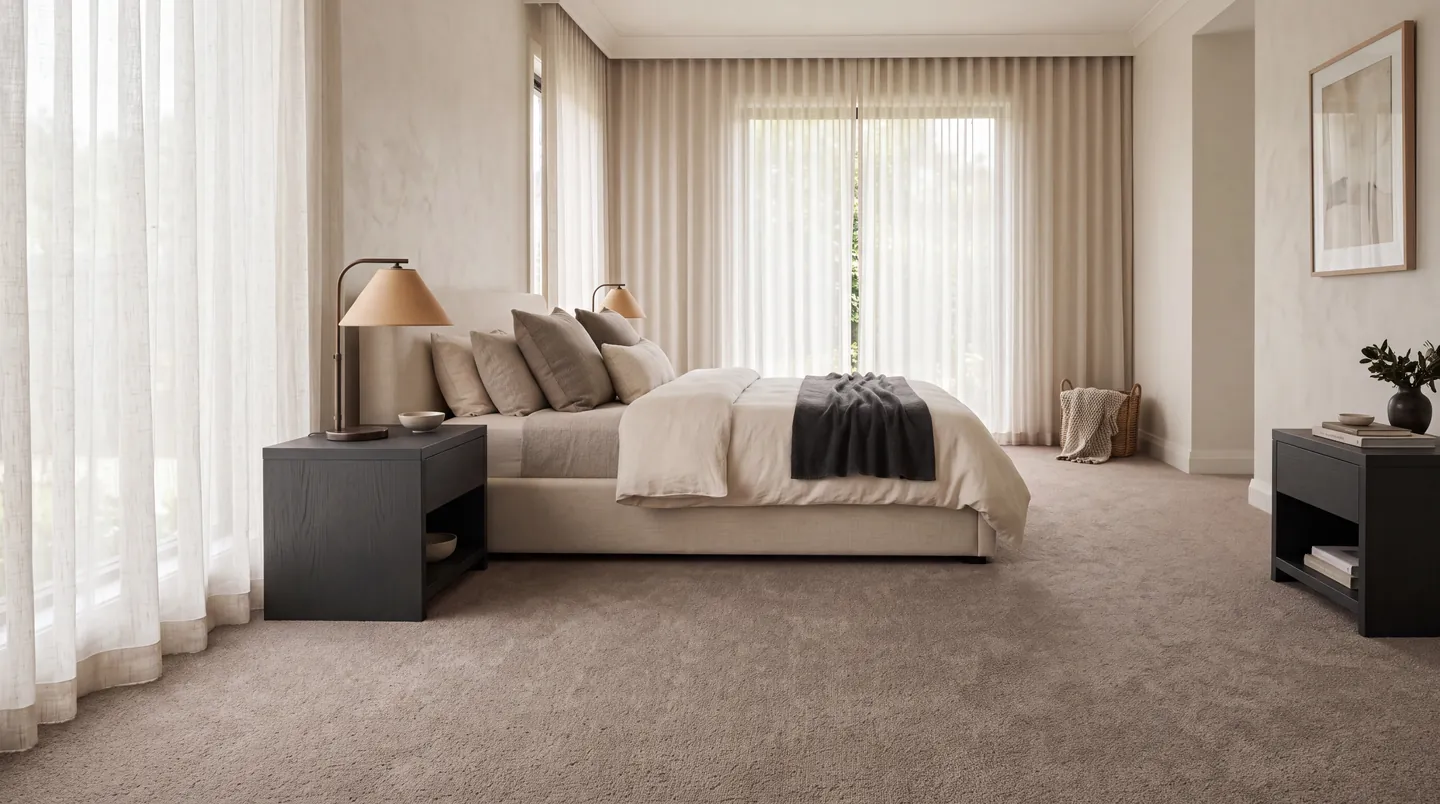
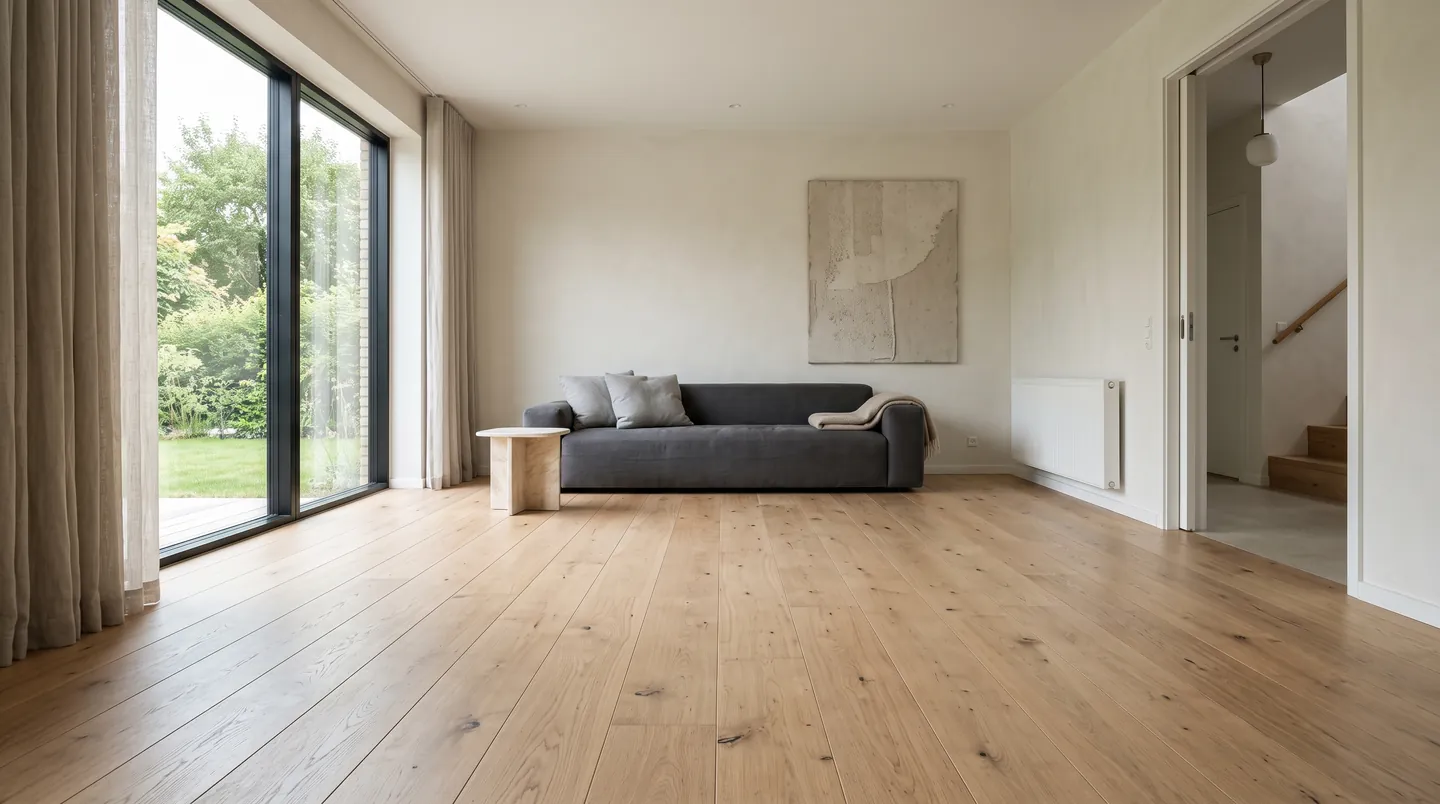
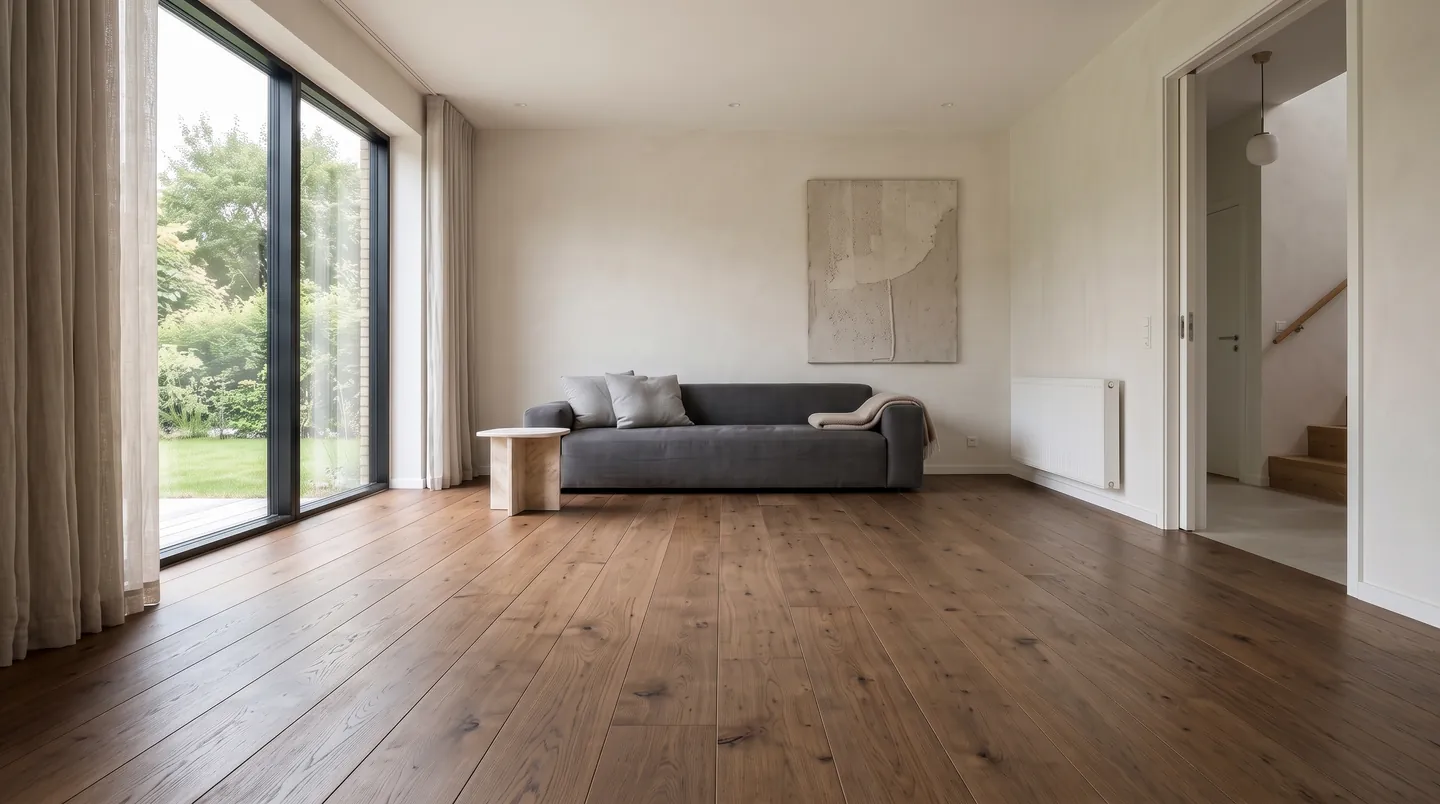
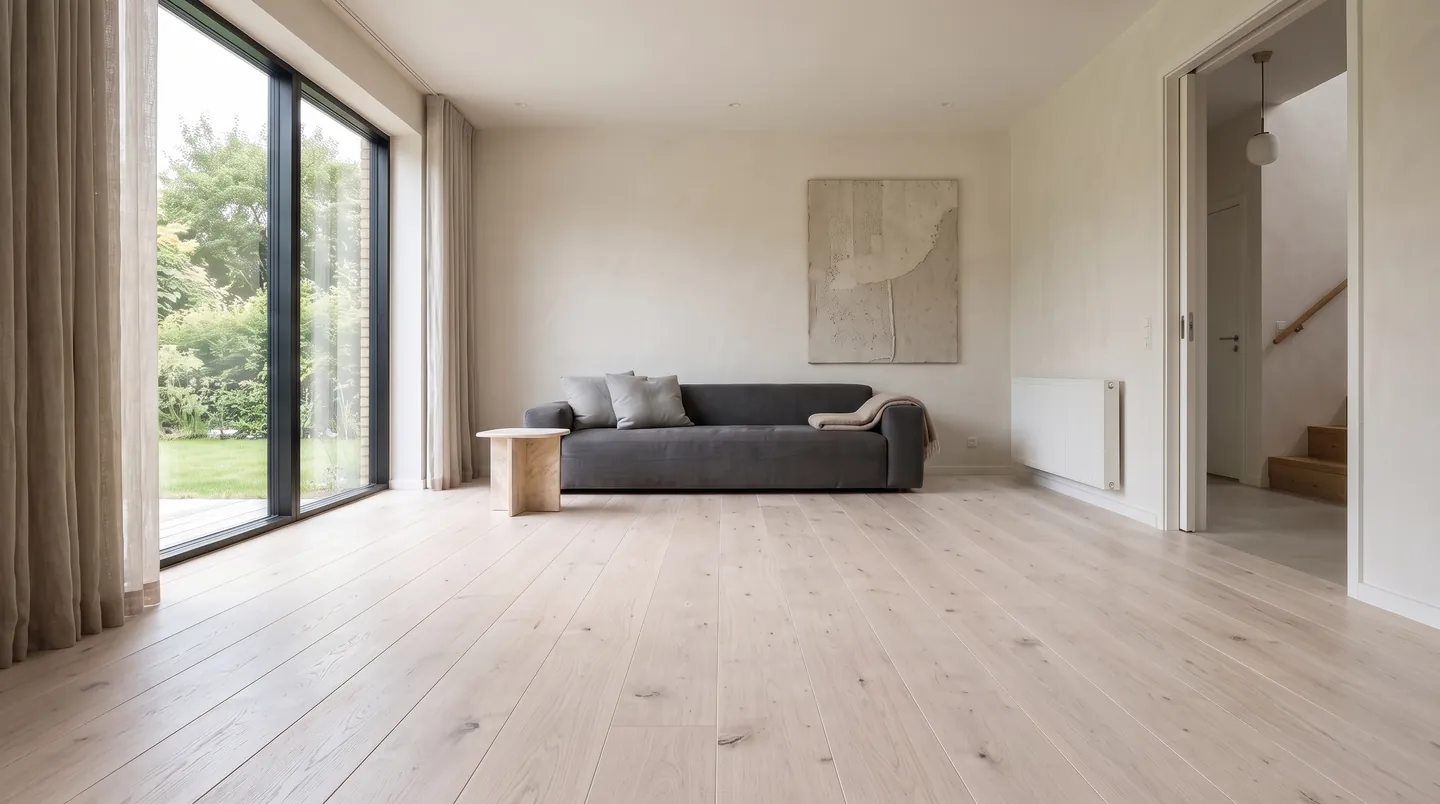
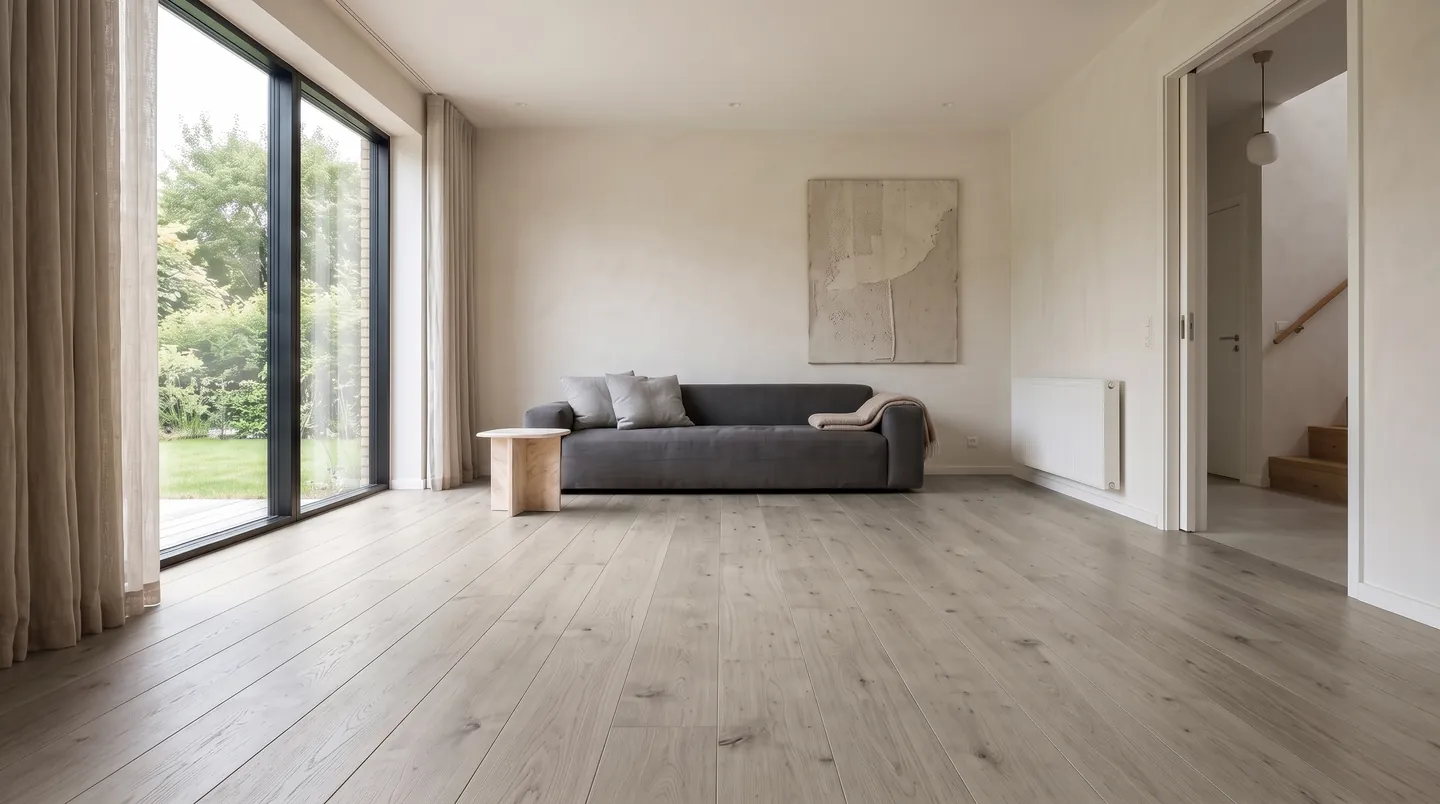
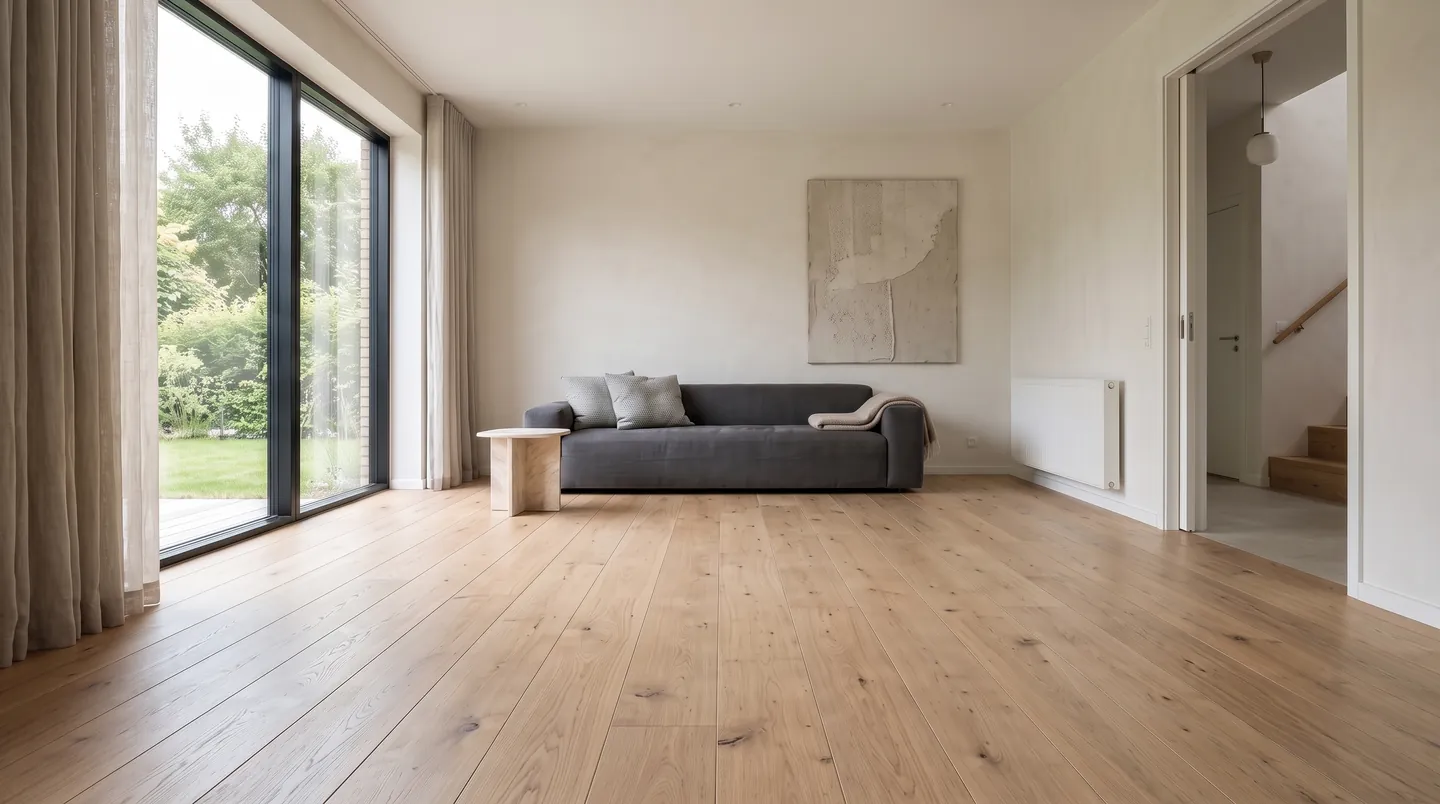
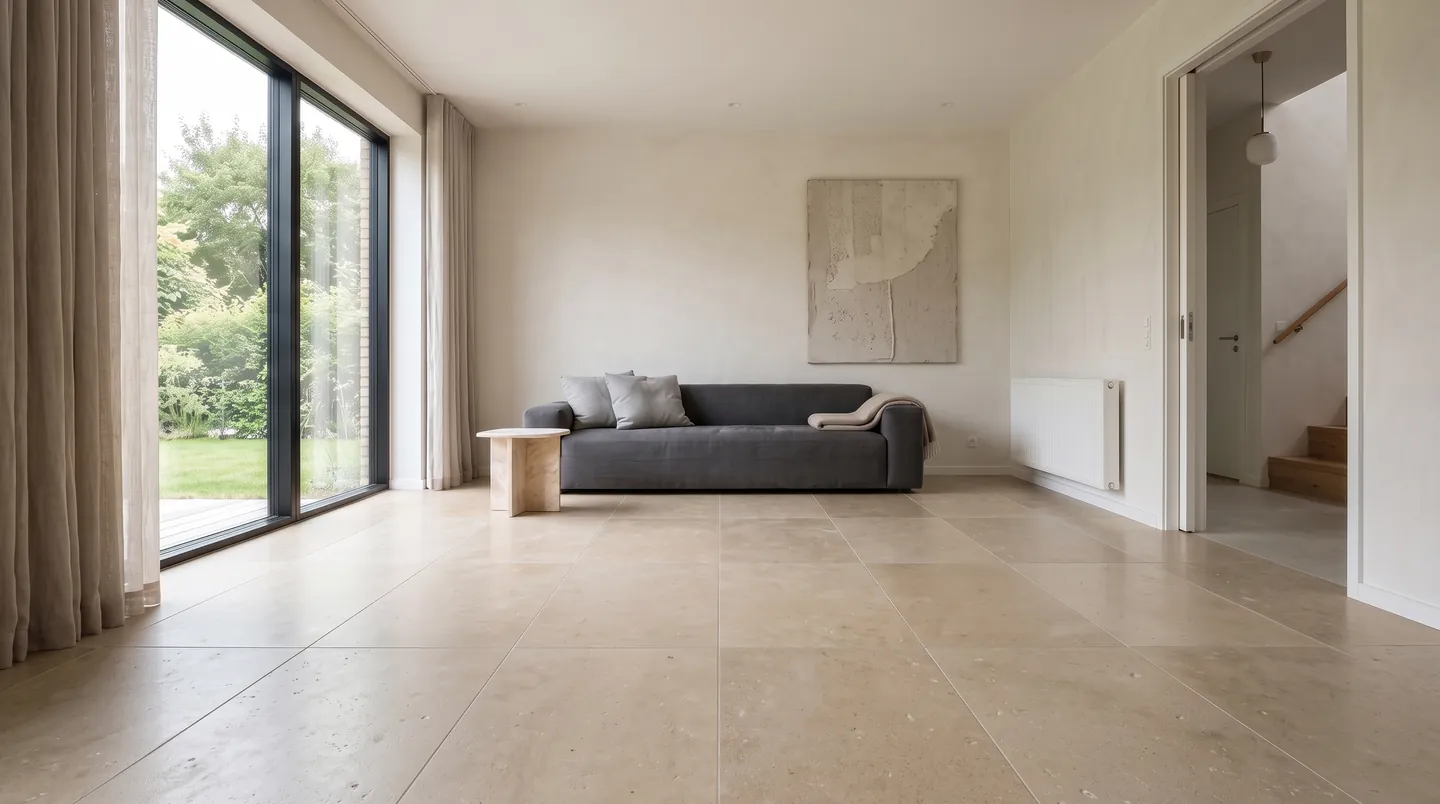
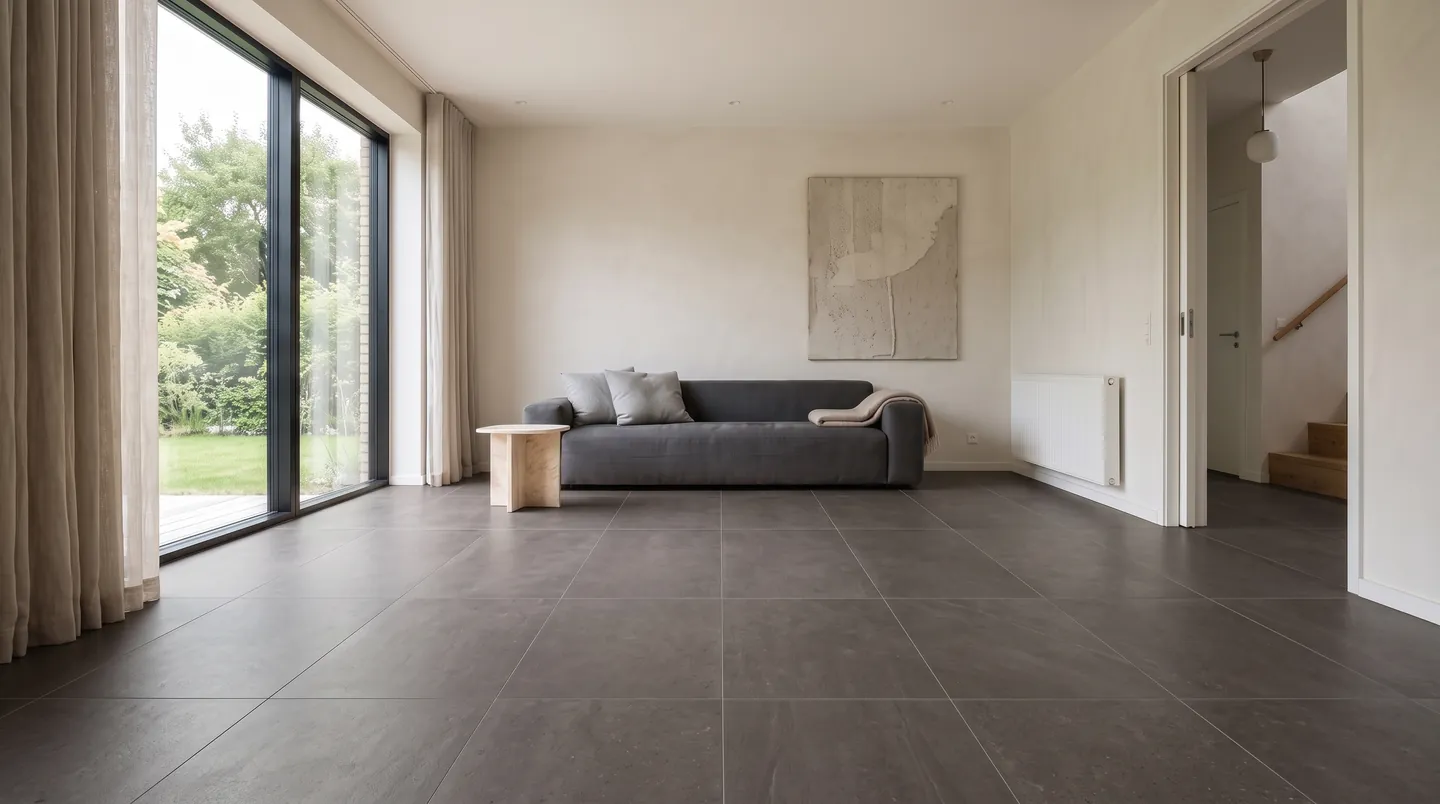
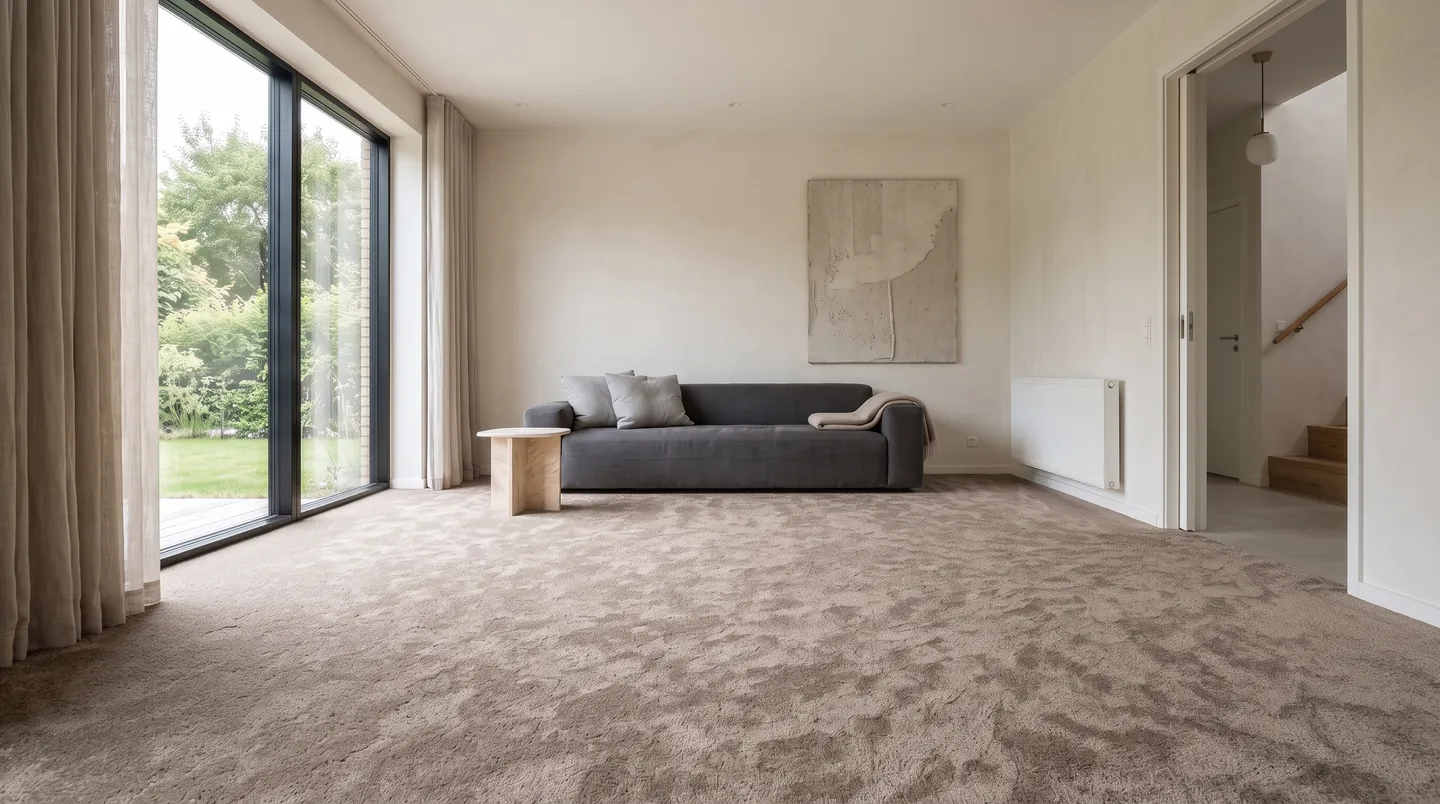
Our flooring collections are organized by how each material behaves, not by brand. Walk through the five families below, then put eight of them into the same room with the visualizer and compare them side by side.
Hard-wearing and scratch resistant, with crisp embossed texture. Laminate earns its place in dry living areas where dogs and chairs are hard on floors.
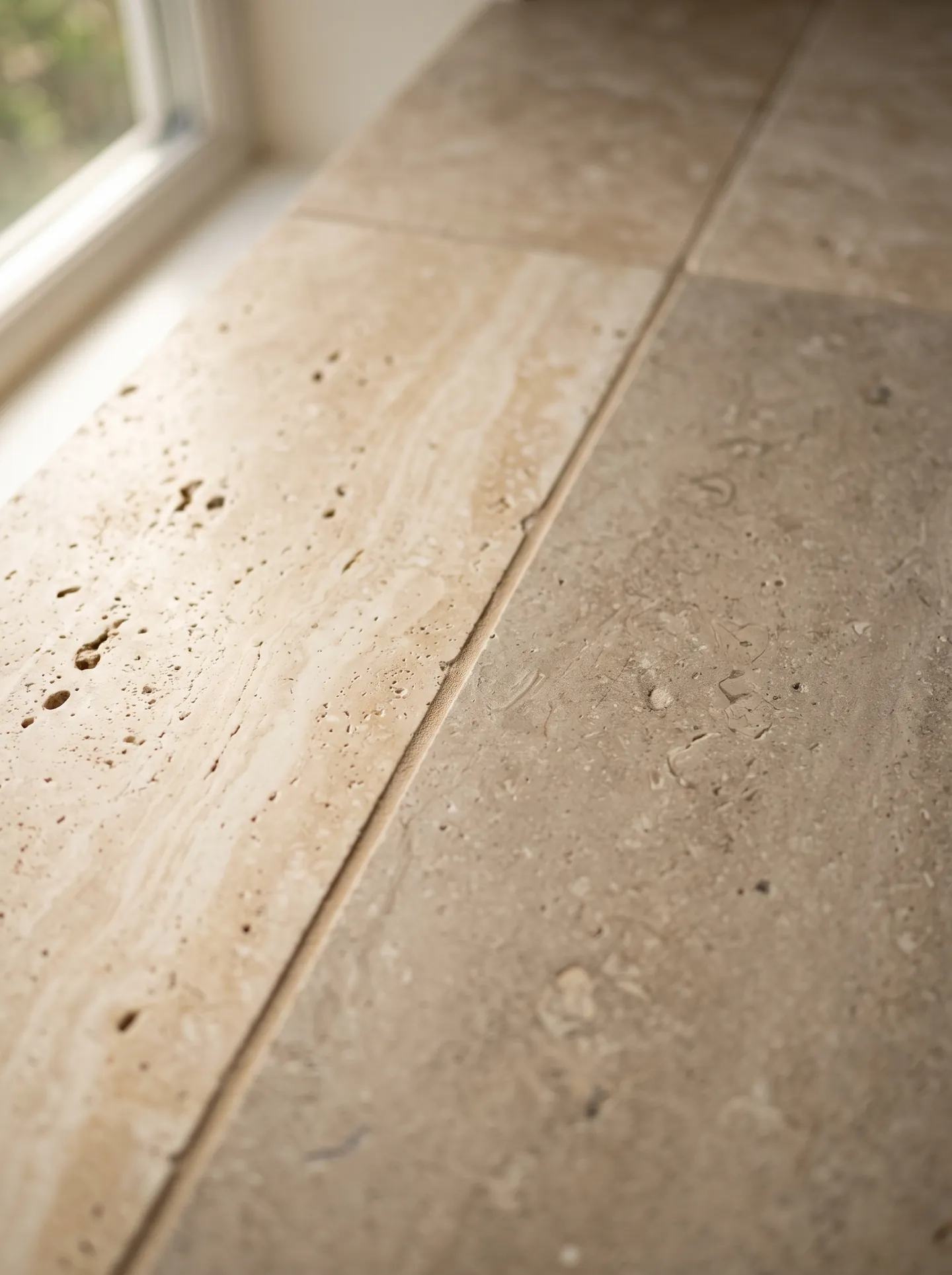
The most permanent surface in the house. Large-format porcelain and honed limestone reward a flat substrate and careful layout with decades of service.
Most flooring decisions get made at a sample board, under showroom lights, with one plank in hand. That's the worst place to judge a floor. The questions that decide whether a material works are duller and more specific: how much water reaches the floor, what scratches it, whether it can be renewed, and what it sounds like when someone crosses it in hard shoes.
The table compares the main options on those points. It's general guidance about how each material behaves, not a promise about any one product. Ratings vary a lot inside every category, so read the spec sheet for the line you're actually considering.
How common flooring materials compare
Material
Water tolerance
Scratch resistance
Refinishable
Comfort underfoot
Sound
Typical rooms
Solid hardwood
Low. Standing water cups boards
Moderate. Set by species hardness (Janka) and finish
Pick a floor for the worst day it will see, not the best. A kitchen floor has to survive a dishwasher leak and a dropped cast-iron pan. A mudroom takes grit, salt and wet boots. A bedroom floor mostly needs to be quiet and pleasant under bare feet at six in the morning.
Then look at what's underneath. A basement slab can push moisture up through the concrete, which rules out solid hardwood and makes a moisture test non-negotiable for everything else. An upstairs room over a living area brings sound into it: floating floors can carry footfall noise to the room below unless the underlayment is chosen for that job.
If this sounds like your room, start here
Water reaches the floor regularly: full baths, laundry, mudrooms.
Porcelain tile, or rigid-core vinyl where tile isn't practical.
You want a floor you can renew in 15 years, not replace.
Solid or engineered hardwood with a wear layer thick enough to sand.
Large dogs share a dry living area.
Laminate rated AC4 or higher, or vinyl with a heavy wear layer.
You're replacing an old floor and don't know what's under it.
Plan the replacement around a subfloor inspection before you settle on finishes.
Five numbers worth asking for
Every category has one or two specs that predict wear better than the marketing does.
Janka hardness for wood species. Higher numbers dent less, though the finish takes most day-to-day scratches.
Wear layer thickness: millimeters on engineered hardwood (it decides whether you can sand), mil on luxury vinyl.
AC rating on laminate. AC3 suits most homes; AC4 and AC5 handle heavier traffic and pets.
DCOF on tile, the wet slip-resistance figure. For level interior floors that get wet, 0.42 is the usual minimum.
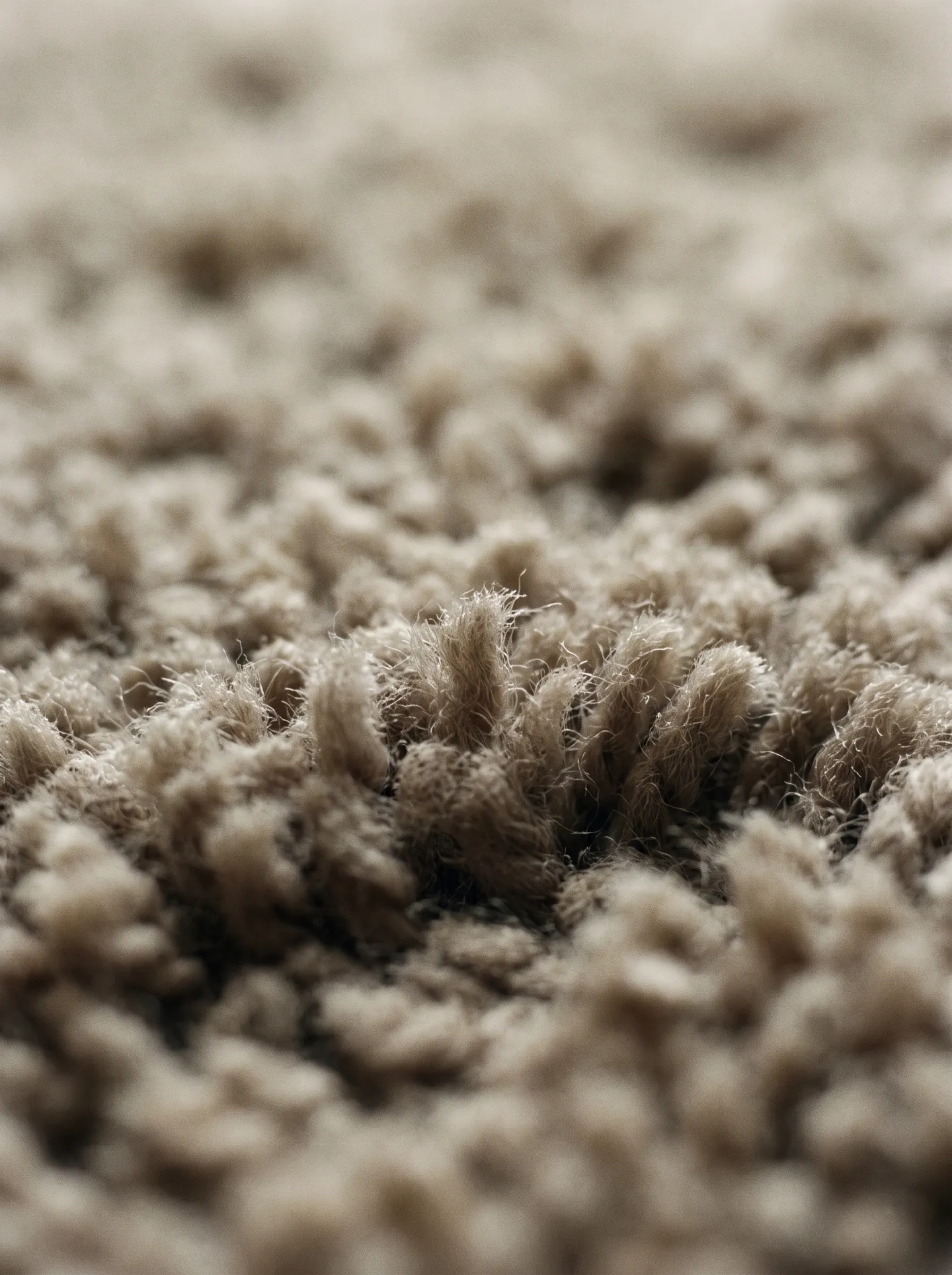
Density and twist on carpet. They predict crushing far better than face weight or how soft it feels in the store.
Questions
Flooring selection questions
Which flooring works for a whole-house install?
There's rarely one material that suits every room. Many homes run one wood or wood-look floor through the living areas and switch to tile in full baths and laundry. If you want one continuous surface, rigid-core vinyl and some engineered hardwoods can cover more rooms than solid wood, as long as wet areas are detailed properly.
Is luxury vinyl really waterproof?
The rigid core doesn't swell, so spills won't ruin the planks. Water can still travel through seams and around the edges to the subfloor, where it causes the real damage. Treat waterproof as water-resistant on top, and keep perimeter details and transitions tight.
How accurate is the flooring visualizer?
It's illustrative. The renders show relative tone and contrast in one furnished room, but they aren't a physically accurate simulation of any product. Colors vary by screen, so always confirm with physical samples in your own light.
Can engineered hardwood be refinished?
Usually, if the wear layer is thick enough. A thin wear layer may only allow a light screen and recoat, while a thicker one can be fully sanded one or more times. Check the product's specification before you count on it.
Should the flooring run the same direction in every room?
In connected spaces, usually yes, so the floor reads as one surface. Run planks with the longest sightline or toward the main light, and plan any change of direction at a doorway with a clean threshold.
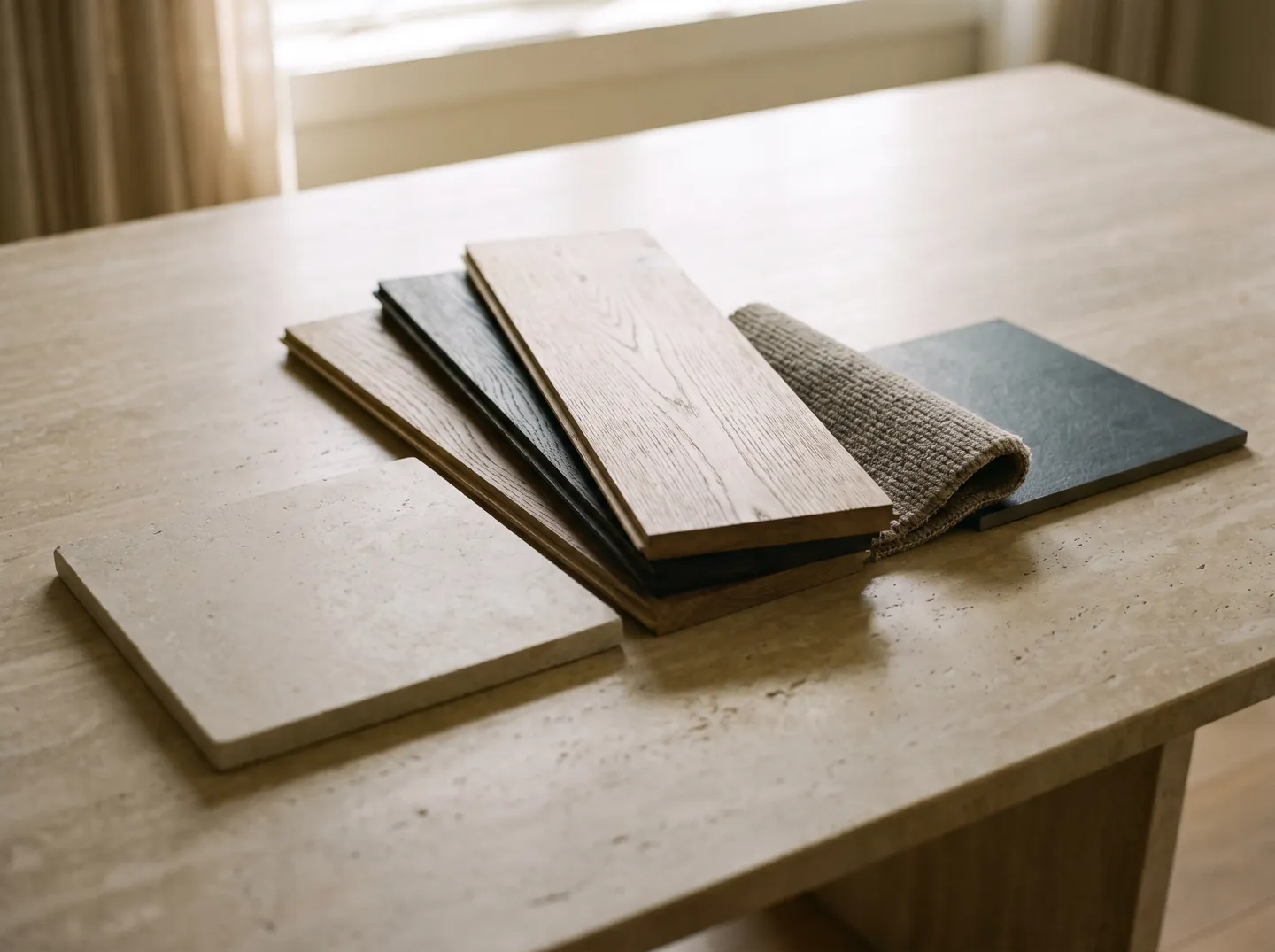
Bring the samples home before you decide.
Tell us which rooms you're covering and which floors made the shortlist. We'll help you test them in your own light and come back with a clear estimate.