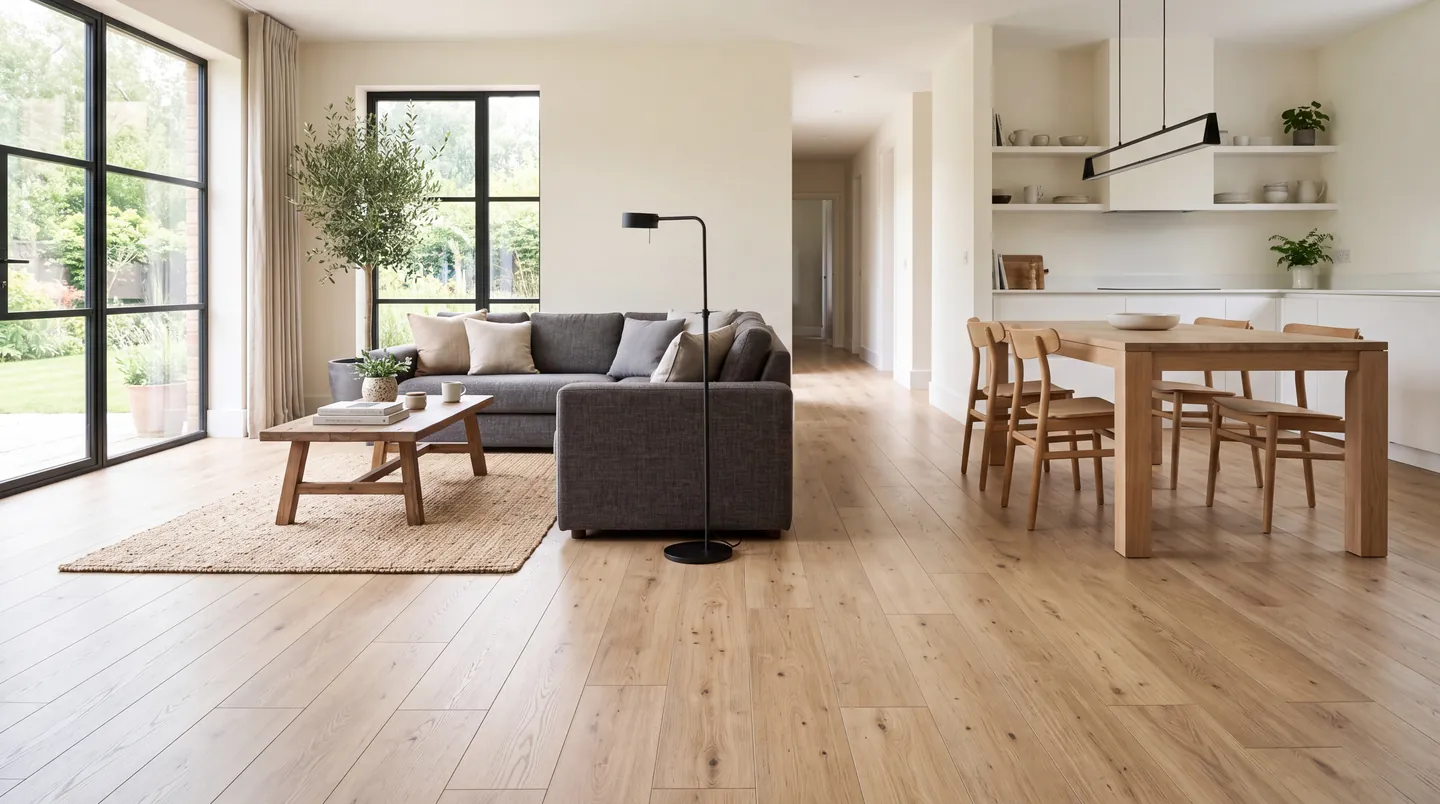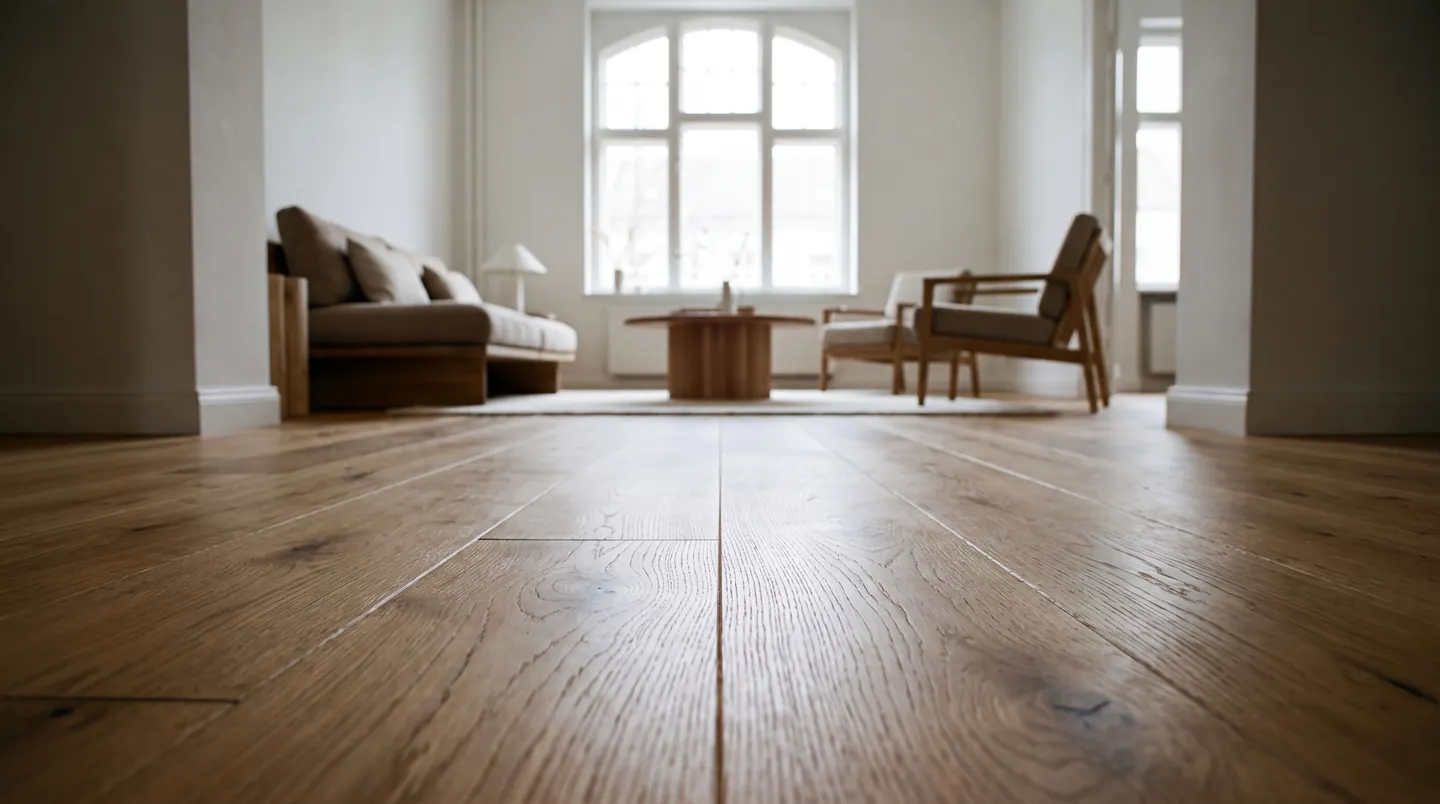
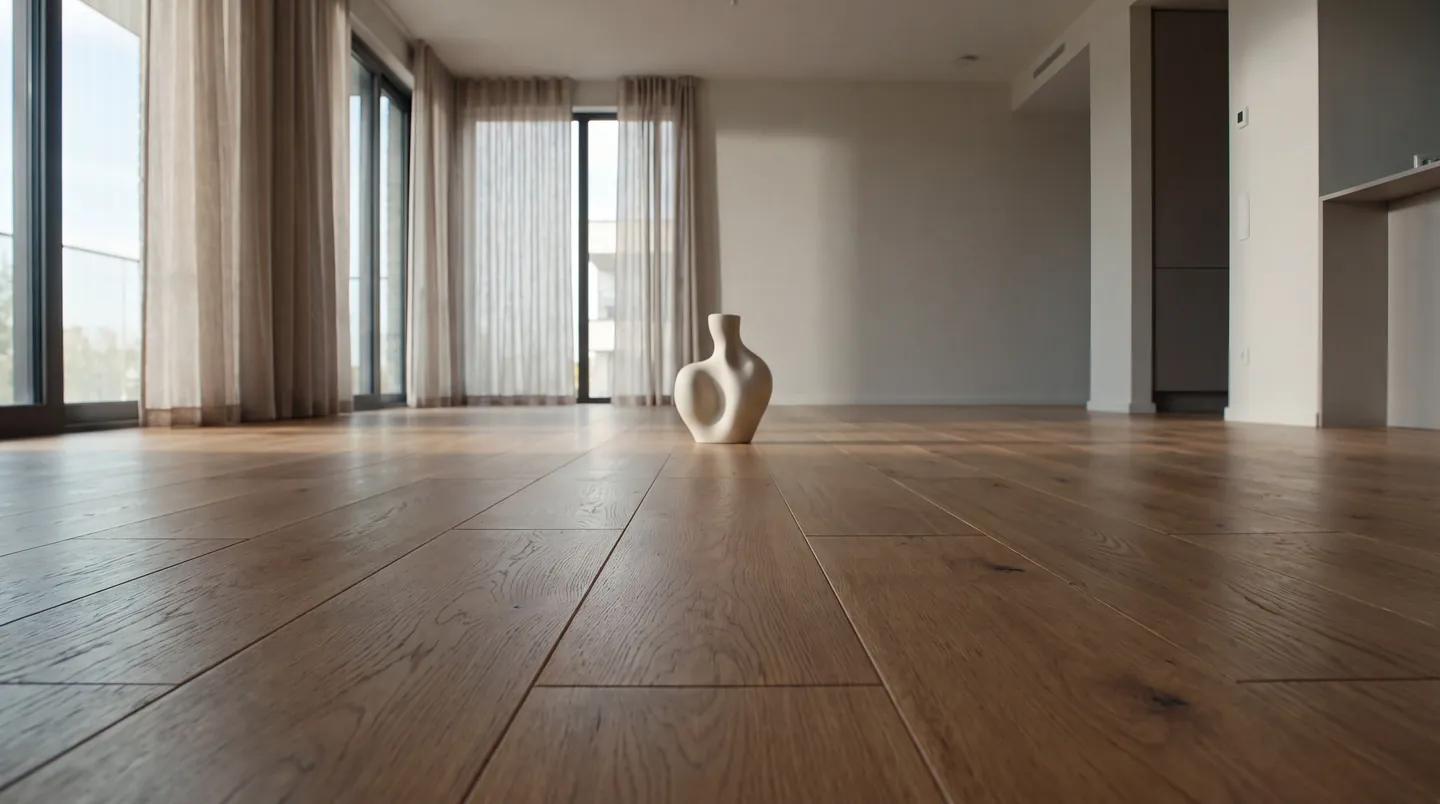
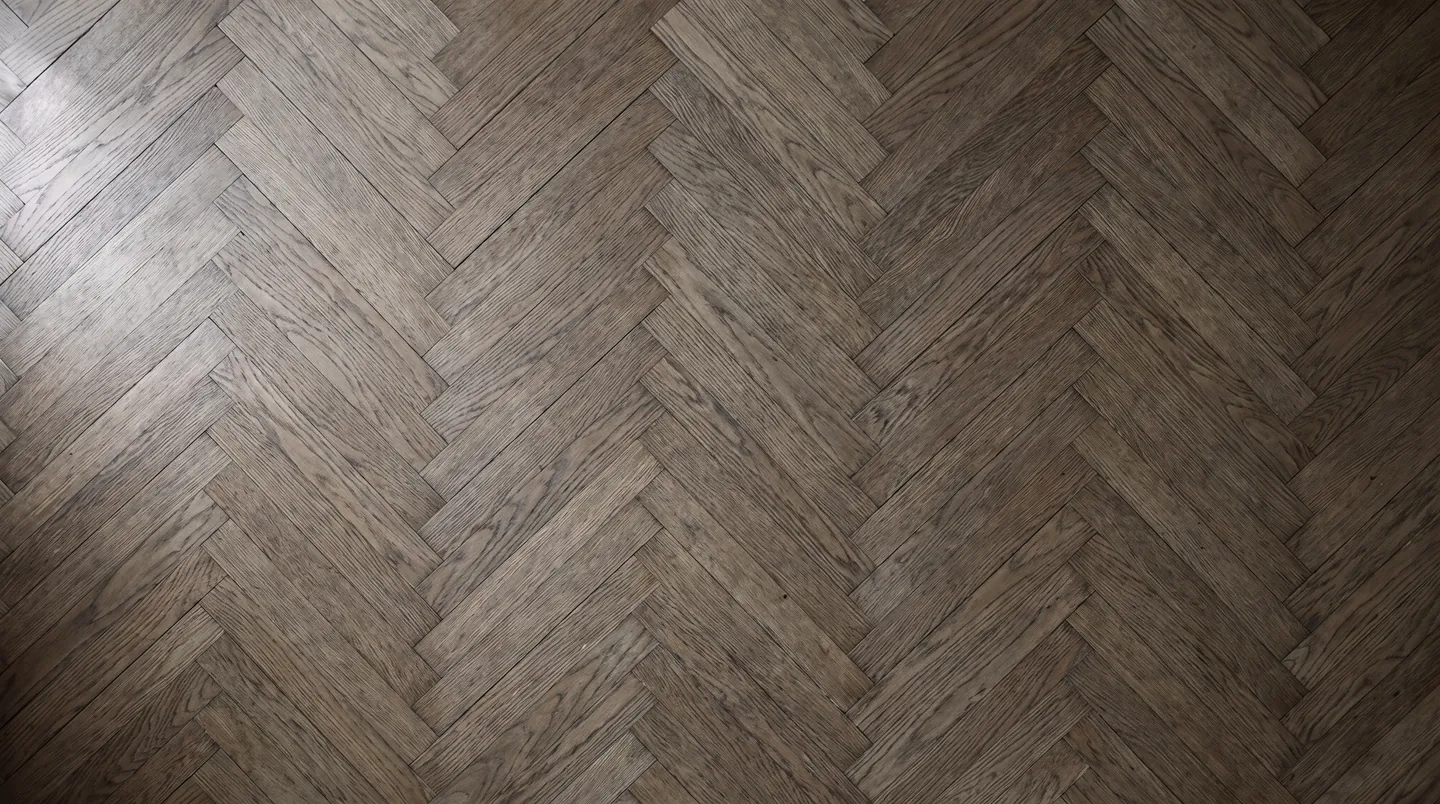
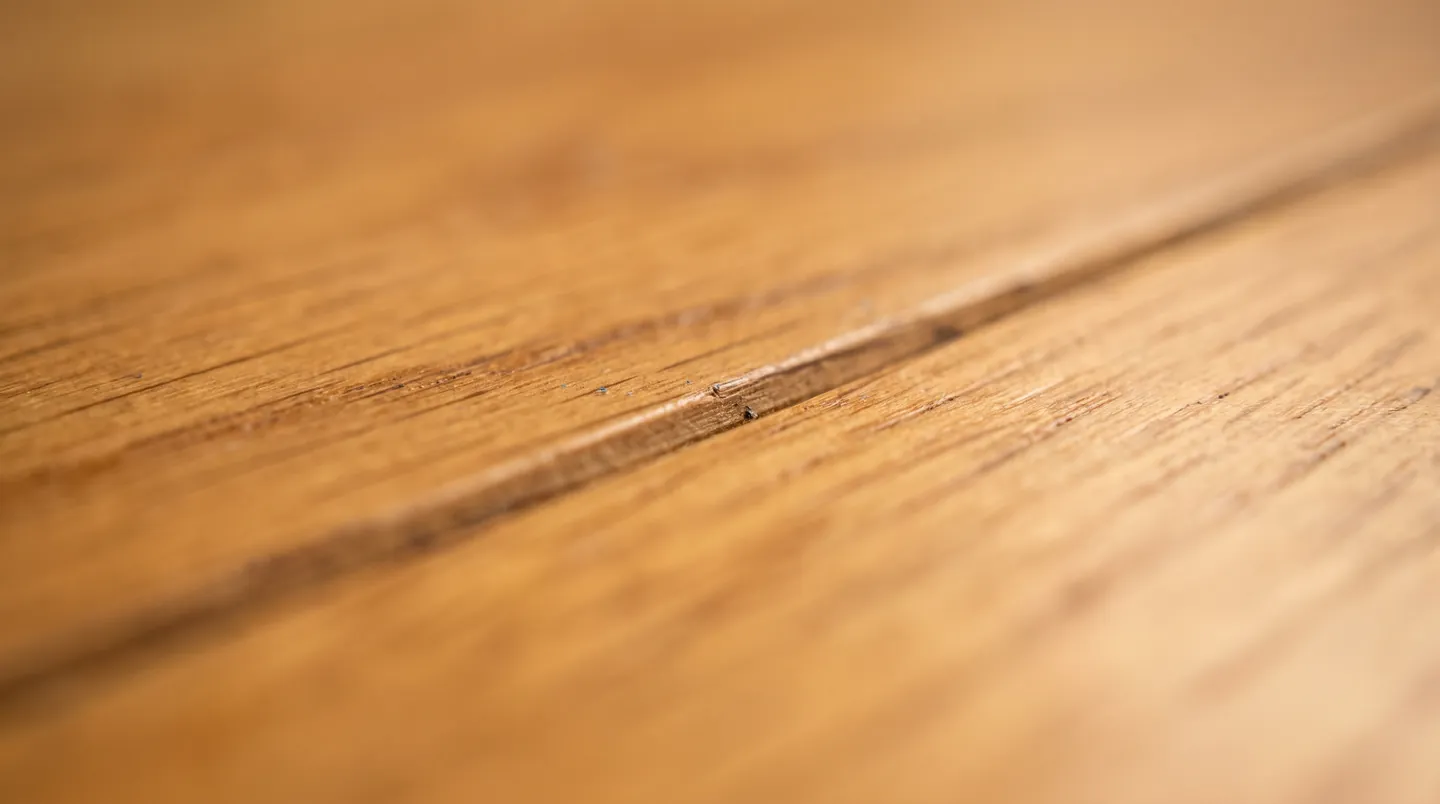
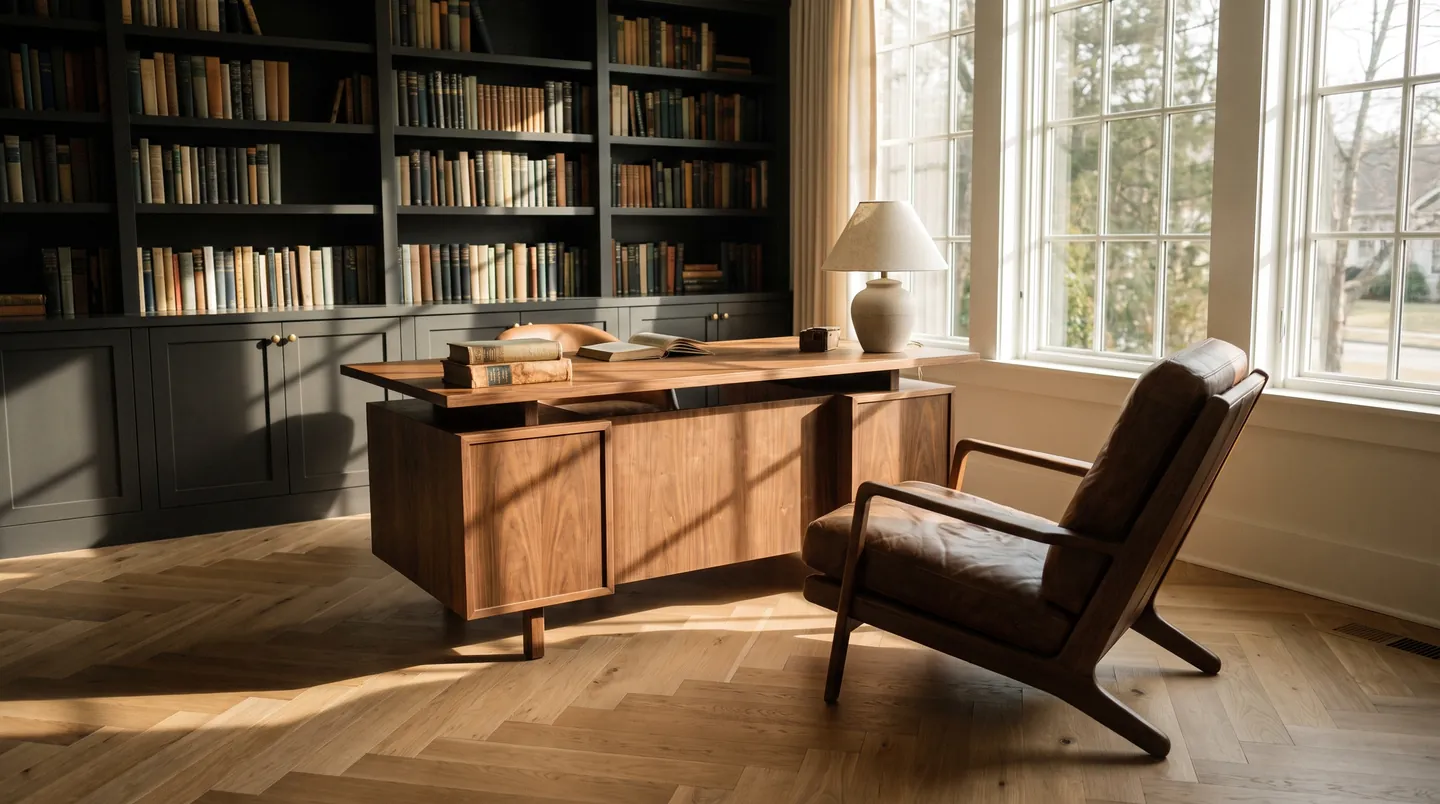
Hardwood flooring is still the only floor you can sand back to bare wood and finish again, but only if the construction, species and finish match the room it's going into.
Hardwood Flooring Starts With the Room, Not the Sample Board
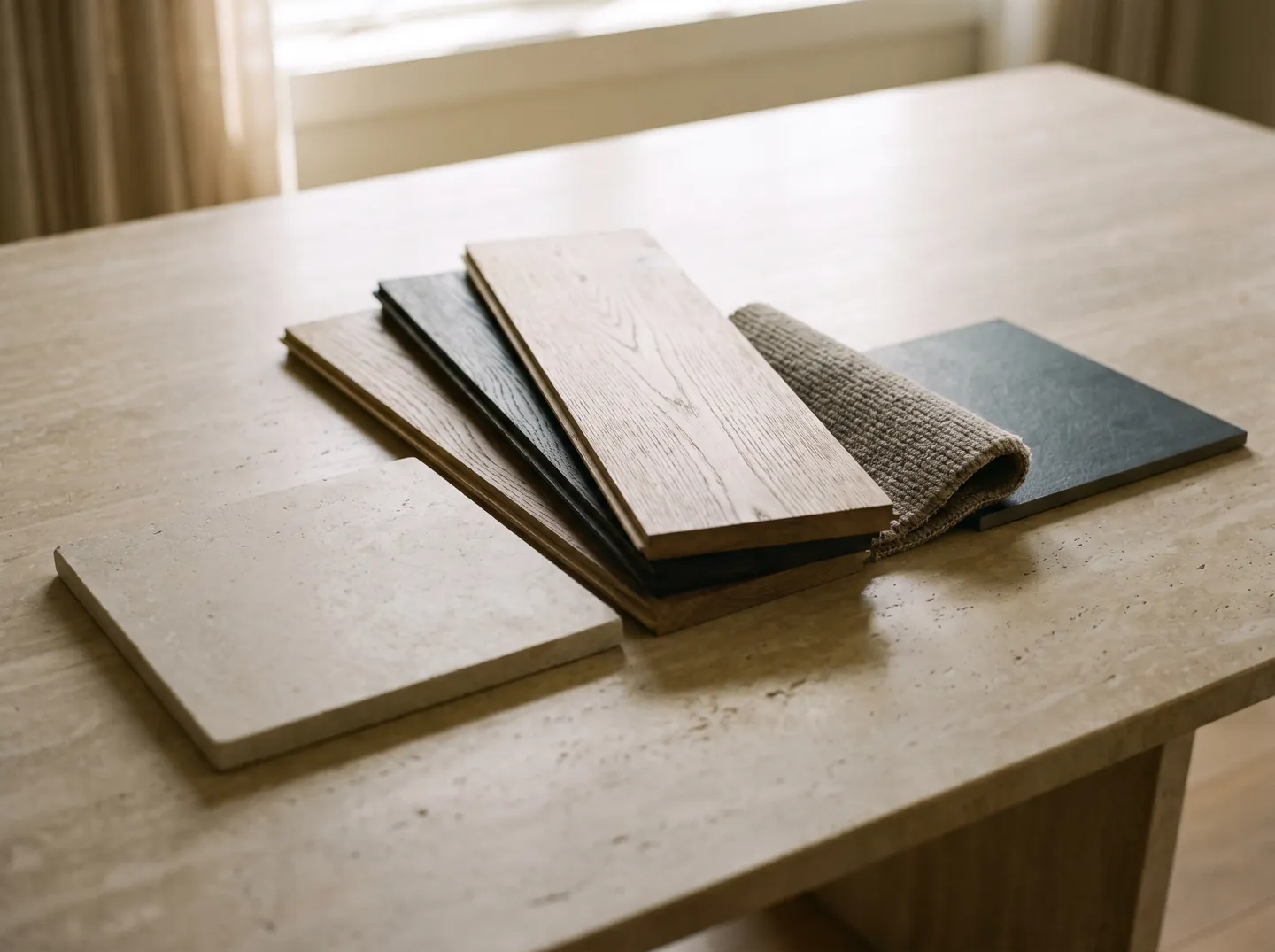
Most hardwood flooring regrets start with a color picked in a showroom. The sample board can't tell you how that plank behaves over a concrete slab, in a sunroom that bakes every July, or beside a dishwasher that will eventually leak.
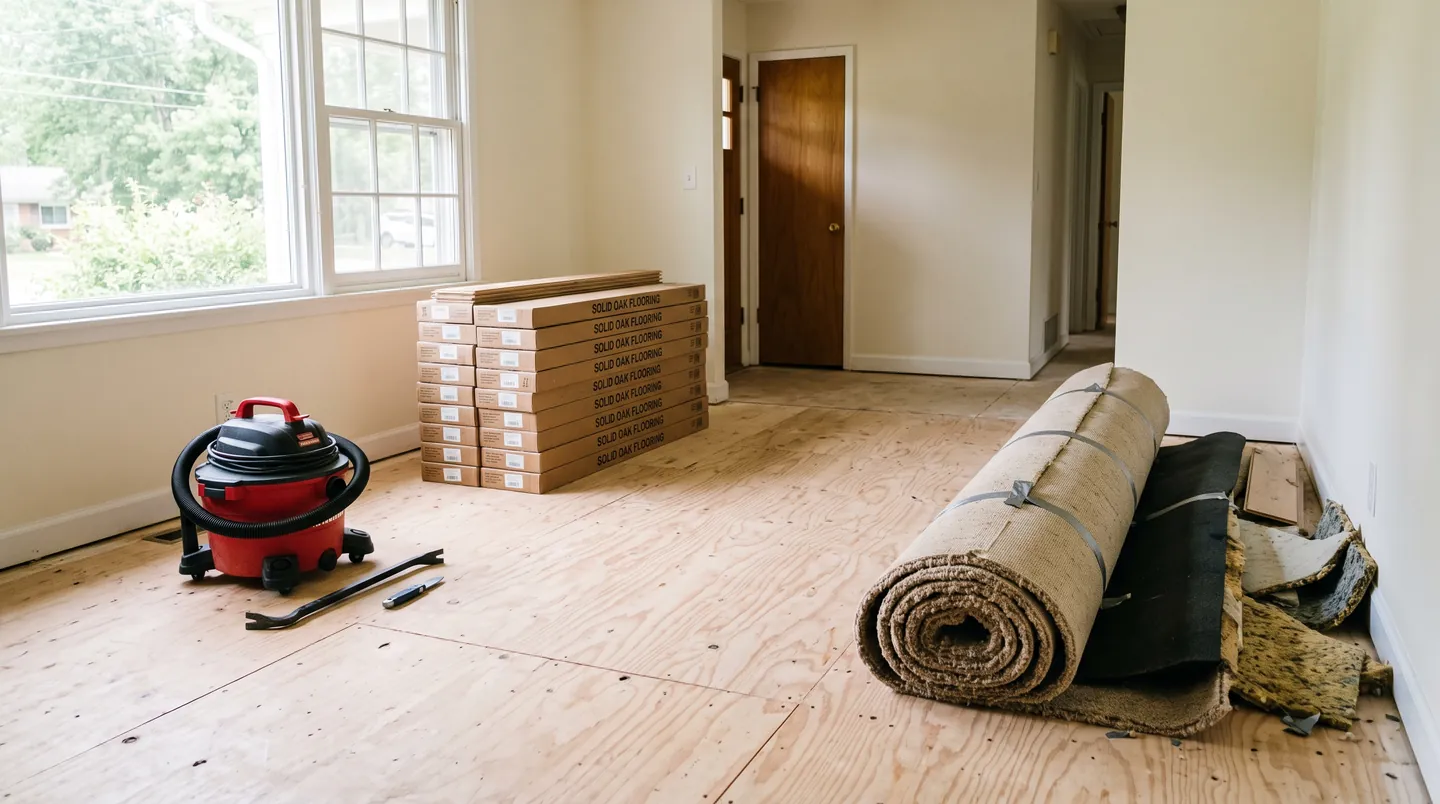
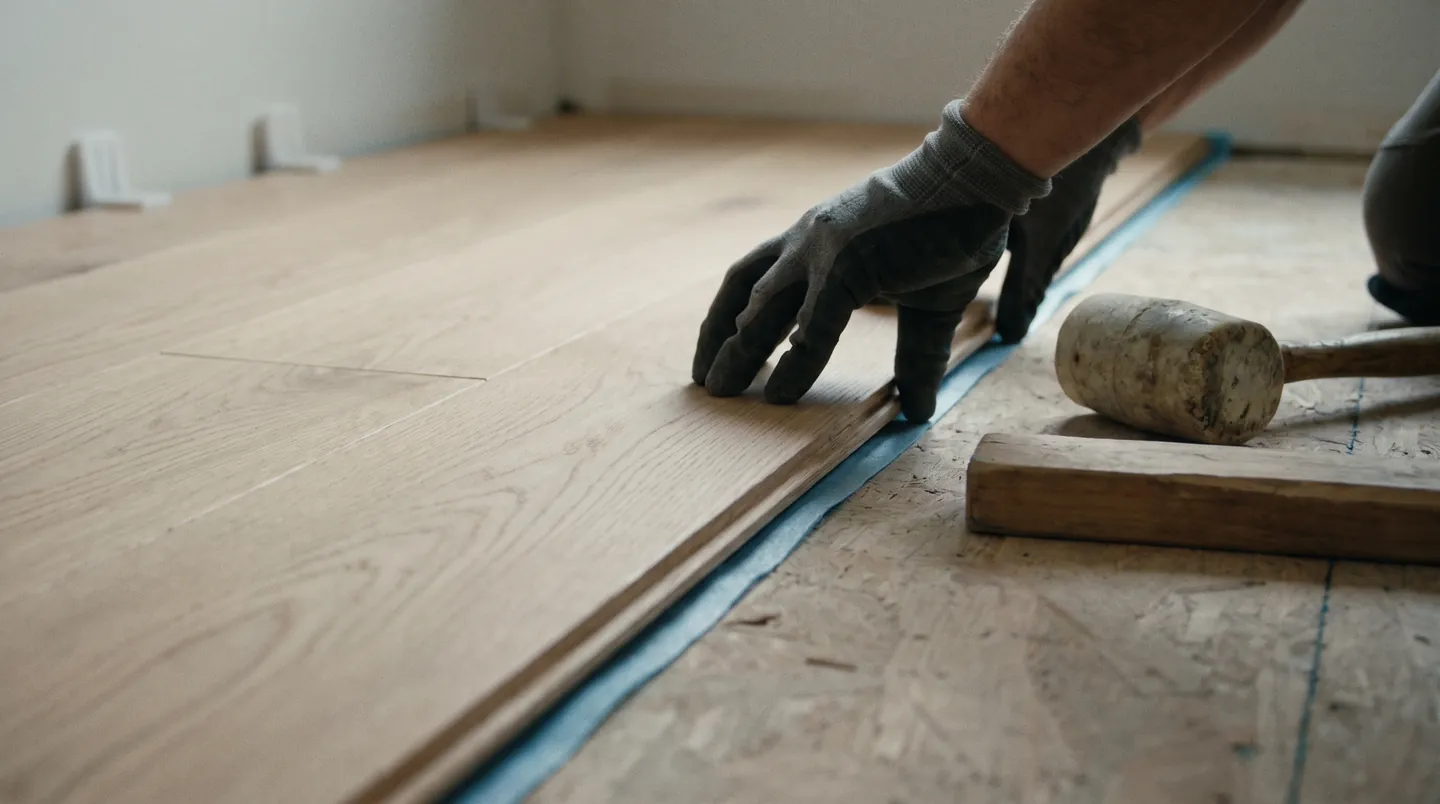
So ask three questions first. Is the room above, on or below grade? Is the subfloor plywood, OSB or concrete? How far does indoor humidity swing between seasons? If the answer is a damp basement, we'd point you toward waterproof luxury vinyl plank down there and save the oak for upstairs. Then read how our installation process works, because moisture testing comes before delivery day.
Solid vs Engineered Hardwood: Where Each One Wins
| Factor | Solid hardwood | Engineered hardwood |
|---|---|---|
| Construction | One piece of wood, typically 3/4 inch | Hardwood wear layer over a cross-ply core |
| Full sandings | Several over its life | None to several, set by the wear layer |
| Below grade | Generally not recommended | Approved by many manufacturers |
| Radiant heat | Usually excluded | Often approved, with temperature limits |
| Planks 5 inches and wider | Prone to cupping and seasonal gaps | Holds its shape better |
| Install methods | Nail or staple | Nail, staple, glue or float |
Every row bends to the specific product. Its installation guide outranks any general chart.
Why Engineered Oak Outlasts Solid in Basements
Wood swells across its width as it absorbs moisture. A solid board has nothing holding it back, while an engineered core's plies run in alternating directions and fight each other's movement, so the plank stays flat when basement humidity climbs in August. You still need a slab moisture test and whatever vapor retarder the guide requires. Engineered isn't waterproof. It's just calmer.