
Test Old Sheet Vinyl Before Anyone Scrapes It
For decades, some sheet vinyl, vinyl tile and the black or brown adhesives under them were made with asbestos. You can't tell by looking. Houses from the 1970s, common across Centennial, and some later ones can still carry that flooring in kitchens, baths and laundry rooms, or buried under newer carpet and click planks. The concern is disturbing it: sanding, grinding, dry scraping or breaking it up.
So test first. A small sample of the flooring and of the adhesive, sent to an accredited lab, answers the question, and the result sets the plan. None of this is legal or medical advice. For handling and removal rules, talk to a licensed abatement contractor or the state health department.
What the Lab Result Means for Your Floor
Split-Levels Are Mostly Transitions
Centennial incorporated in 2001, but its neighborhoods are older: Willow Creek, Southglenn and Walnut Hills hold a lot of split-levels and two-stories. A split-level packs four floor heights into one house, joined by short flights of stairs, and every landing is a place where materials change. Choose one hard surface for the main and upper levels, then decide early how the half-flights get finished. A short run of carpeted stairs between two wood levels can look like an afterthought unless it's planned.
The lowest level is a basement floor in practice, often partly below grade on a slab. Test the concrete for moisture, work around any radon vent pipe without breaking its seal, and lean toward rigid-core vinyl, porcelain tile or engineered wood approved for below grade.
Common Surprises Under 40-Year-Old Floors
- Two or three layers stacked in the kitchen, leaving it higher than the hallway.
- Particleboard underlayment swollen near the dishwasher or toilet.
- Lower-level slab cracks from clay soil movement, which need repair before a click floor goes down.
- Floor registers and door bottoms that won't clear a thicker new floor.
Office Flooring Near the Denver Tech Center
| Area | Common choice | Why |
|---|---|---|
| Open office | Carpet tile | Quiet, and single tiles lift out for repairs or floor boxes |
| Lobby and entry | Porcelain tile or commercial LVT | Handles grit and winter deicer from the parking lot |
| Break room | Commercial LVT or sheet vinyl | Water-resistant and easy to clean |
| Conference room | Carpet tile, or LVT over acoustic underlayment | Sound control |
| Equipment room | Static-control tile | Follow the IT or equipment spec |
Property managers often set install hours, elevator bookings and paperwork requirements. Get the building's rules in writing first.
Commercial lines carry heavier wear layers and different ratings than residential ones, so a residential plank that looks identical won't hold up in a lobby. For an office flooring installation, ask for the commercial rating in writing. Next door, Littleton's mid-century ranches and split-levels raise similar questions. See all Front Range service areas, or request an estimate for your Centennial home or office.
Centennial flooring questions
Could the old sheet vinyl in my Centennial kitchen contain asbestos?
It might. Some resilient flooring and adhesives made over several decades did, and age alone won't confirm it either way. The only reliable answer is a lab test on a sample of both the flooring and the adhesive. Until you have results, avoid sanding, scraping or tearing it. For removal rules, consult a licensed abatement contractor.
Can new flooring go over old sheet vinyl without removing it?
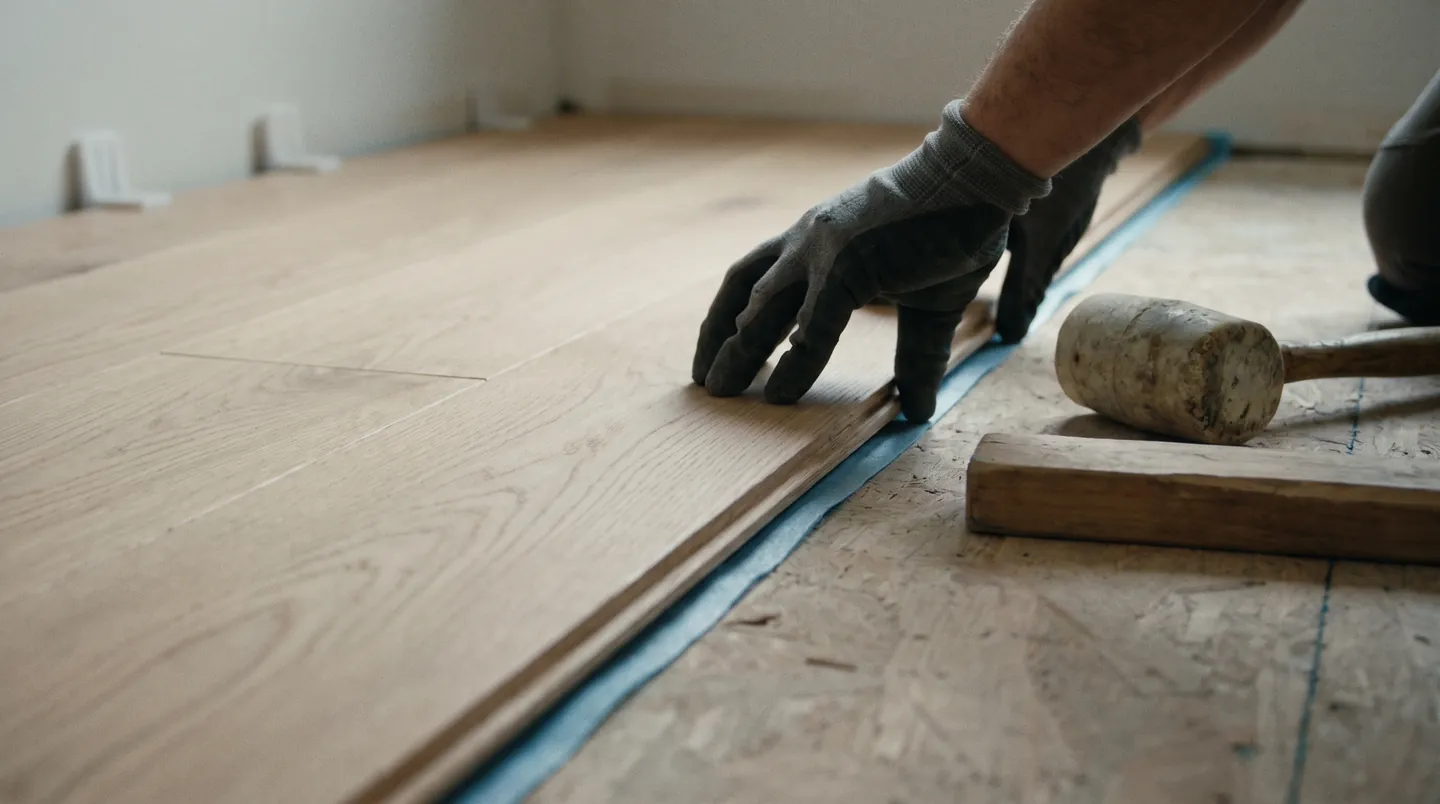
Often, if the old layer is a single sheet, flat, well bonded and not cushioned. Floating vinyl or laminate can usually go over it with the right underlayment, and some glue-down products allow it with a primer or patch. Check the new product's installation guide, and remember that each layer raises the floor at doors and cabinets.
What should a Denver Tech Center office check before choosing new flooring?
Start with the building's rules: install hours, elevator access and any paperwork the property manager requires. Then match products to traffic, with carpet tile in open areas and commercial LVT or porcelain at entries and break rooms. Ask for the commercial wear rating in writing, and confirm the slab passes the adhesive maker's moisture limit before anything is glued down.